

Country: Sierra Leone
Administrative region: Northern (Province)
Central co-ordinates: 8.90000 N, 10.8 W
Area: 402km²
Qualifying IPA Criteria
A(i)Site contains one or more globally threatened species, A(iii)Site contains one or more highly restricted endemic species that are potentially threatened, B(ii)Site contains an exceptional number of species of high conservation importance, C(iii)Site contains nationally threatened or restricted habitat or vegetation types, AND/OR habitats that have severely declined in extent nationally
IPA assessment rationale
This site qualifies as an IPA as it contains globally significant populations of twenty-four species that trigger criterion A(i), one species that triggers criterion A(iii), and seven species that trigger B(ii).
Site description
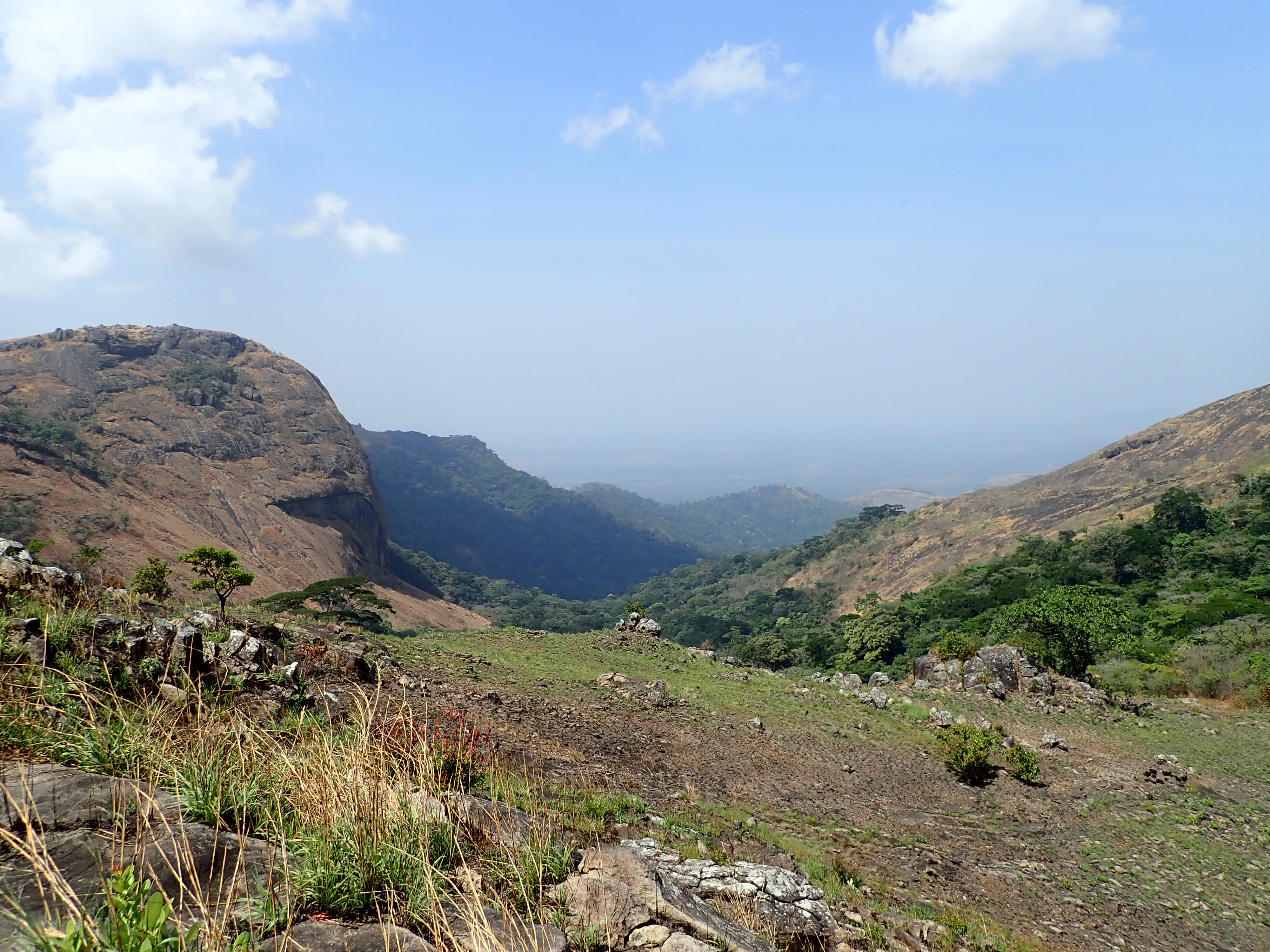
The Tingi Hills IPA is situated in the north-eastern escarpment of Sierra Leone, near the border with the Republic of Guinea. These hills form part of the Guinea Dorsale that extends from the Foula Djalon Plateau. Next to the Loma Mountains, the Tingi Hills are the second most prominent mountain range in the country. The highest point at this site is the Sankan Biriwa massif, which rises to 1705 m asl. This massif is the source of tributaries of two major rivers, the Sewa and the Mano, which descend the massif in a series of cascades and rapids. This Tingi Hills boundary closely aligns to the area of the Tingi Hills Non Hunting Forest Reserve (Protected Planet 2024).
Botanical significance
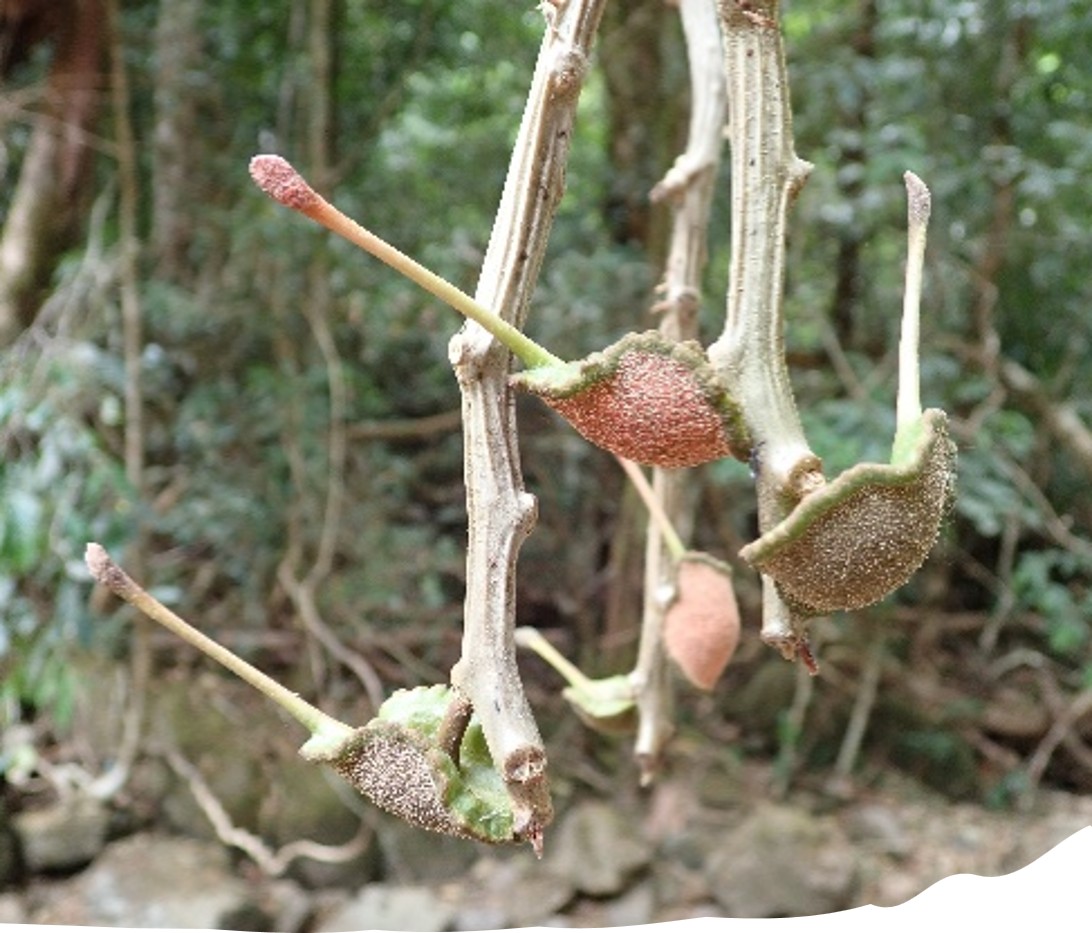
The Tingi Hills belong to the Loma-Man Highlands phytogeographic region. The Tingi Hills IPA is a globally significant site for many plant species, including at least thirty-four threatened plant species and six endemic plant species. These six endemic plant species recorded at the site are Afrotrilepis jaegeri (LC), Bulbostylis neocapitata (LC), Dryopteris amblyodonta (EN), Gladiolus leonensis (EN), Loudetia jaegeriana (NE) and Vernonia jaegeri (EN). They are all associated with submontane grassland and inselberg habitat. The Tingi Hills show a strong botanical affinity to the nearby Loma Mountains IPA, which have been comparatively more extensively studied. Afrotrilepis jaegeri, Bulbostylis neocapitata, Gladiolus leonensis and Vernonia jaegeri are only found in the Loma Mountains and the Tingi Hills.
The Tingi Hills is the only place in Sierra Leone where the perennial grass Schizachyrium penicillatum (EN), has been collected. It is also known from the Pita and Kindia Prefectures in Guinea, and there are also unverified records from southwest Burkina Faso (Cantiero & Cheek 2019). This IPA holds globally and nationally significant populations for this species. Despite having a broad ecological range, spanning both sandstone and granite habitats, this species has not been collected widely. Further research and targeted survey for this species are recommended.
Stonesia gracilis (Podostemaceae) has been recorded at the site (Morton, J.K. 2933). This rheophytic herb is currently assessed as Critically Endangered based on its confirmed occurrence at a single site in Guinea (Cheek & Ouedraogo 2018) however, it is possible that this species also occurs in Sierra Leone and one or more additional sites in Guinea. It is possible that other threatened Podostemaceae species occur at the waterfalls in the Tingi Hills, although Stonesia gracilis is currently the only record of Podostemaceae there. Further investigation into this habitat at the site recommended.
Habitat and geology
The Tingi Hills fall within the Guinean Montane Forests ecoregion (Dinerstein et al. 2017). The vegetation of the Tingi Hills is comprised of submontane forest and submontane grassland interspersed by inselberg peaks, with gallery forest along drainage lines. The Tingi Hills is known to contain five rare and globally threatened habitats: Low-altitude evergreen forest, Submontane forest (500+ m) and gallery forest, Submontane grassland (mainly 1000+ m), Waterfall habitat and Granite inselbergs.
Closed forests at the base of the hills are discontinuous and mostly secondary. Much of the predicted native vegetation on these lowland areas (evergreen and semi-deciduous forest) has been degraded due to agricultural practices and fire (Cole 1967). As a result, many rain forest species have been replaced by secondary forest trees in derived vegetation (Cole 1967). The southern portion of the site is relatively intact, featuring stands of primary rain forest (Global Forest Watch 2024), while the drier northeast exhibits a forest-savanna mosaic (Cole 1968). The open savanna vegetation on the eastern slopes contains fire resistant species such as Lophira lanceolata, Parkia biglobosa, Pterocarpus erinaceus and tall grasses including Anadelphia leptocoma, A. tectorum and Hyparrhenia diplandra.
The tree composition of the gallery forests is similar to that of lowland forests, displaying diverse tree species with abundant epiphytes. Dominant species include Amphimas pterocarpoides, Bombax buonopozense, Cola lateritia var. maclaudii, Entandrophragma utile, Odyendea gabunensis, Parinari excelsa, Piptadeniastrum africanum and Uapaca guineensis (Cole 1968). Gallery forests at higher altitudes at the site have a greater presence of tree ferns (Cyathea and Marattia) and bamboo thickets (Oxytenanthera abyssinica) (Cole 1967).
Rain forests transitions to submontane forest at approx. 500 m a.s.l. (Couch et al. 2019). This submontane forest is characterized by a small number of tree species that become more prevalent at higher altitudes, for example Parinari excelsa. Grasslands contain shrubs such as Kotschya ochreata var. ochreata, Droogmansia scaettaiana, Rosettea elliotii, and Pogospermum depauperatum (Cole 1968). Near grassland edges, fire-adapted shrubs like Syzygium guineense are more common (Cole 1968).
Annual fires play a crucial role in maintaining plant communities in submontane grasslands (Couch et al. 2019). At higher altitudes, the treeline ends abruptly and transitions into submontane meadows interspersed with outcropping inselberg domes. Dominant species in the submontane grassland include Ctenium newtonii, Hyparrhenia nyassae and Loudetiopsis chrysothrix, along with Gladiolus spp., Coleus lateriticola, C. lyratus, and Cyanotis longifolia, as well as Euphorbia depauperata, Thesium tenuissimum and Vernonia jaegeri (Cole 1968).
Inselbergs often appear desolate during the dry season, however in the wet season they are covered in a mostly herbaceous vegetation of high diversity. Small-scale ecological alterations create a mosaic of plant communities, with nine distinct microhabitats identified on inselbergs in West Africa (Porembski et al. 1994, Muller 2007). The vegetation in ephemeral flush habitats is dynamic and rich in carnivorous plants and monocotyledons (Muller 2007). Inselberg domes are typically dominated by sedge communities, with tufted Afrotrilepis pilosa and the endemic orophyte Afrotrilepis jaegeri prevalent on these steep slopes (Cole 1968). Near the summit of Sankan Biriwa, other dominant species recorded include Loudetiopsis chrysothrix and shrubby herbs such as Melastomastrum capitatum, Coleus monostachyus, and C. pobeguinii (Cole 1968). On the less steep rocky slabs, saxicolous plants like Mesanthemum jaegeri, Gladiolus aequinoctialis, the orchid Polystachya microbambusa, as well as various lichens and mosses can be found.
The geology of the Tingi Hills is primarily felsic, dating back to the Archean (Williams 1978). The ancient gneisses at the site were modified upon contact with the heat and magma from later granitoid intrusions. This interaction resulted in migmatite margins at the site where the gneisses partially melted, leading to a gradational transition between the two rock types (Rollinson 2018). Such features are characteristic of the complex geological histories at the site involving multiple cycles of crustal melting and magmatic intrusion. The younger granites that form the inselberg formations at the site are comprised of both biotite and porphyroblastic granite, which are likely cogenetic, having formed from the same magmatic source and during the same intrusion event (Rollinson 2018). The soils derived from these parent rocks varies in composition across the site, with slopes generally exhibiting leached soils, while valleys retain relatively fertile conditions. Cambisols, less developed soils with moderate fertility, are predominantly found at higher elevations, while Acrisols, highly weathered, acidic soils with lower fertility typical of the tropics, are present in lowland areas (Poggio, L et al. 2020).
Conservation issues
The intensity of human activities varies across the Tingi Hills. Within the IPA land use categories include conservation, commodities (such as agriculture and mining), and small settlements (Dugbema, Bendu, Kiabgasima, Kenewa, Yarakonko, Dandu, Nelikoro, Gbeaia; Google Earth 2024). The inhabitants of these villages utilize the area for timber and non-timber forest products (NTFPs); however, data on the extent and impact of these uses are lacking. This IPA largely overlaps with the Tingi Hills No Hunting Forest Reserve, a protected area where the capture of animals is strictly prohibited and extractive activities, such as logging, are permitted only under stringent conditions (Forestry Division 2017). Currently, there is no management plan for this protected area, nor are there actions in place to incorporate and monitor plant diversity at the site (FAO 2023).
The upper areas of the hills are lightly impacted due to challenging topography and absence of roads. In contrast, the lowland regions have experienced significant tree cover loss over the past 20 years (Global Forest Watch 2024) and continue to face threats from human activities, including land clearing for agriculture and fire. Anthropogenic fires linked to slash-and-burn agricultural practices particularly threaten native vegetation not adapted to high-frequency fire, such as rain forests. Consequently, lowland areas have degraded, shifting in composition from rain forest species to secondary forest species (Cole 1967).
Mining, both small and commercial scale, poses a significant threat to the site. Bravura Mining (SL) Limited holds an active nickel exploration license over the northern half of the IPA (GoSL 2024). Although there are currently no active licenses, mining remains a potential threat, particularly to the lower portions of the site. Inselbergs are predominantly formed of granite, are crucial for concrete production when crushed and are used in large infrastructure projects, including buildings, dam walls, and road construction (Couch et al. 2019). Small-scale mining activities have been recorded along the rivers at the southern end of the reserve (Okoni Williams et al. 2001, Birdlife 2024).
Ecosystem services
This site provides critical habitat for numerous species, earning its designation as both an Important Bird Area (IBA) and an Important Plant Area (IPA). While the IPA is utilized by local communities, specific details regarding these uses remain undocumented. The site serves as an important water catchment, offering essential ecosystem services such as erosion control, water quality and filtration. The Tingi Hills are a key catchment area for two major rivers in Sierra Leone: the Sewa and Moa. The Bafi, Moni, and Mansayi rivers are tributaries of these two rivers. The Bafi originates from the western slopes, while the Mansayi arises from the southeastern slopes; both rivers flow southward and converge to form a tributary of the Sewa River. The Moni River, which originates in the northeast, flows into the Meli River, which runs along the eastern border of Sierra Leone as a tributary of the Moa River (Cole 1967).
Site assessor(s)
Assessed by:
Gabriella Hoban, Royal Botanic Gardens, Kew
Xander van der Burgt, Royal Botanic Gardens, Kew
Martin Cheek, Royal Botanic Gardens Kew
Reviewed by:Fanny Massally, The Royal Botanic Gardens, Kew
IPA criterion A species
| Species | Qualifying sub-criterion | ≥ 1% of global population | ≥ 5% of national population | 1 of 5 best sites nationally | Entire global population | Socio-economically important | Abundance at site |
|---|---|---|---|---|---|---|---|
| Acalypha guineensis J.K. Morton & G.A.Lavin | A(i) |  |
|
|
 |
|
|
| Anubias gracilis A.Chev. ex Hutch. | A(i) | |
|
|
|
|
|
| Baccharoides nimbaensis (C.D.Adams) Isawumi, El-Ghazaly & B.Nord. | A(i) | |
|
|
|
|
|
| Coleus pobeguinii Hutch. & Dalziel | A(i) | |
|
|
|
|
|
| Paleodissotis leonensis (Hutch. & Dalziel) Ver.-Lib. & Burgt | A(i) | |
|
|
|
|
|
| Homalium smythei Hutch. & Dalziel | A(i) | |
|
|
|
|
|
| Hypolytrum cacuminum Nelmes | A(i) | |
|
|
|
|
|
| Rhytachne glabra (Gledhill) Clayton | A(i) | |
|
|
|
|
|
| Schizachyrium lomaense A.Camus | A(i) | |
|
|
|
|
|
| Schizachyrium penicillatum Jacq.-Fél. | A(i) | |
|
|
|
|
|
| Xyris festucifolia Hepper | A(i) | |
|
|
|
|
|
| Xysmalobium samoritourei Goyder | A(i) | |
|
|
|
|
Scarce |
| Dryopteris amblyodonta J.P.Roux | A(i) | |
|
|
|
|
|
| Gladiolus leonensis Marais | A(i) | |
|
|
|
|
|
| Vernonia jaegeri C.D.Adams | A(i) | |
|
|
|
|
|
| Loudetia jaegeriana A.Camus | A(iii) | |
|
|
|
|
|
| Eriosema spicatum subsp. collinum (Hepper) J.K.Morton ex Verdc. | A(i) | |
|
|
|
|
|
| Entandrophragma utile (Dawe & Sprague) Sprague | A(i) | |
|
|
|
|
|
| Homalium smythei Hutch. & Dalziel | A(i) | |
|
|
|
|
|
| Mesanthemum jaegeri Jacq.-Fél. | A(i) | |
|
|
|
|
|
| Pavetta platycalyx Bremek. | A(i) | |
|
|
|
|
|
| Pterocarpus erinaceus Poir. | A(i) | |
|
|
|
|
|
| Stonesia gracilis G.Taylor | A(i) | |
|
|
|
|
|
| Strychnos melastomatoides Gilg. | A(i) | |
|
|
|
|
|
| Terminalia ivorensis A.Chev. | A(i) | |
|
|
|
|
|
| Dorstenia astyanactis Aké Assi | A(i) | |
|
|
|
|
Common |
| Tieghemella heckelii (A.Chev.) Pierre ex Dubard | A(i) | |
|
|
|
|
Scarce |
| Cryptosepalum tetraphyllum (Hook.f.) Benth. | A(i) | |
|
|
|
|
Frequent |
| Copaifera salikounda Heckel | A(i) | |
|
|
|
|
Scarce |
| Entandrophragma candollei Harms | A(i) | |
|
|
|
|
Scarce |
| Landolphia macrantha (K.Schum.) Pichon | A(i) | |
|
|
|
|
|
| Bryaspis humularioides Gledhill | A(i) | |
|
|
|
|
Scarce |
Acalypha guineensis J.K. Morton & G.A.Lavin
Qualifying sub-criterion:
A(i)
≥ 1% of global population:
≥ 5% of national population:
1 of 5 best sites nationally:
Entire global population:
Socio-economically important:
Abundance at site:
Anubias gracilis A.Chev. ex Hutch.
Qualifying sub-criterion:
A(i)
≥ 1% of global population:
≥ 5% of national population:
1 of 5 best sites nationally:
Entire global population:
Socio-economically important:
Abundance at site:
Baccharoides nimbaensis (C.D.Adams) Isawumi, El-Ghazaly & B.Nord.
Qualifying sub-criterion:
A(i)
≥ 1% of global population:
≥ 5% of national population:
1 of 5 best sites nationally:
Entire global population:
Socio-economically important:
Abundance at site:
Coleus pobeguinii Hutch. & Dalziel
Qualifying sub-criterion:
A(i)
≥ 1% of global population:
≥ 5% of national population:
1 of 5 best sites nationally:
Entire global population:
Socio-economically important:
Abundance at site:
Paleodissotis leonensis (Hutch. & Dalziel) Ver.-Lib. & Burgt
Qualifying sub-criterion:
A(i)
≥ 1% of global population:
≥ 5% of national population:
1 of 5 best sites nationally:
Entire global population:
Socio-economically important:
Abundance at site:
Homalium smythei Hutch. & Dalziel
Qualifying sub-criterion:
A(i)
≥ 1% of global population:
≥ 5% of national population:
1 of 5 best sites nationally:
Entire global population:
Socio-economically important:
Abundance at site:
Hypolytrum cacuminum Nelmes
Qualifying sub-criterion:
A(i)
≥ 1% of global population:
≥ 5% of national population:
1 of 5 best sites nationally:
Entire global population:
Socio-economically important:
Abundance at site:
Rhytachne glabra (Gledhill) Clayton
Qualifying sub-criterion:
A(i)
≥ 1% of global population:
≥ 5% of national population:
1 of 5 best sites nationally:
Entire global population:
Socio-economically important:
Abundance at site:
Schizachyrium lomaense A.Camus
Qualifying sub-criterion:
A(i)
≥ 1% of global population:
≥ 5% of national population:
1 of 5 best sites nationally:
Entire global population:
Socio-economically important:
Abundance at site:
Schizachyrium penicillatum Jacq.-Fél.
Qualifying sub-criterion:
A(i)
≥ 1% of global population:
≥ 5% of national population:
1 of 5 best sites nationally:
Entire global population:
Socio-economically important:
Abundance at site:
Xyris festucifolia Hepper
Qualifying sub-criterion:
A(i)
≥ 1% of global population:
≥ 5% of national population:
1 of 5 best sites nationally:
Entire global population:
Socio-economically important:
Abundance at site:
Xysmalobium samoritourei Goyder
Qualifying sub-criterion:
A(i)
≥ 1% of global population:
≥ 5% of national population:
1 of 5 best sites nationally:
Entire global population:
Socio-economically important:
Abundance at site:
Scarce
Dryopteris amblyodonta J.P.Roux
Qualifying sub-criterion:
A(i)
≥ 1% of global population:
≥ 5% of national population:
1 of 5 best sites nationally:
Entire global population:
Socio-economically important:
Abundance at site:
Gladiolus leonensis Marais
Qualifying sub-criterion:
A(i)
≥ 1% of global population:
≥ 5% of national population:
1 of 5 best sites nationally:
Entire global population:
Socio-economically important:
Abundance at site:
Vernonia jaegeri C.D.Adams
Qualifying sub-criterion:
A(i)
≥ 1% of global population:
≥ 5% of national population:
1 of 5 best sites nationally:
Entire global population:
Socio-economically important:
Abundance at site:
Loudetia jaegeriana A.Camus
Qualifying sub-criterion:
A(iii)
≥ 1% of global population:
≥ 5% of national population:
1 of 5 best sites nationally:
Entire global population:
Socio-economically important:
Abundance at site:
Eriosema spicatum subsp. collinum (Hepper) J.K.Morton ex Verdc.
Qualifying sub-criterion:
A(i)
≥ 1% of global population:
≥ 5% of national population:
1 of 5 best sites nationally:
Entire global population:
Socio-economically important:
Abundance at site:
Entandrophragma utile (Dawe & Sprague) Sprague
Qualifying sub-criterion:
A(i)
≥ 1% of global population:
≥ 5% of national population:
1 of 5 best sites nationally:
Entire global population:
Socio-economically important:
Abundance at site:
Homalium smythei Hutch. & Dalziel
Qualifying sub-criterion:
A(i)
≥ 1% of global population:
≥ 5% of national population:
1 of 5 best sites nationally:
Entire global population:
Socio-economically important:
Abundance at site:
Mesanthemum jaegeri Jacq.-Fél.
Qualifying sub-criterion:
A(i)
≥ 1% of global population:
≥ 5% of national population:
1 of 5 best sites nationally:
Entire global population:
Socio-economically important:
Abundance at site:
Pavetta platycalyx Bremek.
Qualifying sub-criterion:
A(i)
≥ 1% of global population:
≥ 5% of national population:
1 of 5 best sites nationally:
Entire global population:
Socio-economically important:
Abundance at site:
Pterocarpus erinaceus Poir.
Qualifying sub-criterion:
A(i)
≥ 1% of global population:
≥ 5% of national population:
1 of 5 best sites nationally:
Entire global population:
Socio-economically important:
Abundance at site:
Stonesia gracilis G.Taylor
Qualifying sub-criterion:
A(i)
≥ 1% of global population:
≥ 5% of national population:
1 of 5 best sites nationally:
Entire global population:
Socio-economically important:
Abundance at site:
Strychnos melastomatoides Gilg.
Qualifying sub-criterion:
A(i)
≥ 1% of global population:
≥ 5% of national population:
1 of 5 best sites nationally:
Entire global population:
Socio-economically important:
Abundance at site:
Terminalia ivorensis A.Chev.
Qualifying sub-criterion:
A(i)
≥ 1% of global population:
≥ 5% of national population:
1 of 5 best sites nationally:
Entire global population:
Socio-economically important:
Abundance at site:
Dorstenia astyanactis Aké Assi
Qualifying sub-criterion:
A(i)
≥ 1% of global population:
≥ 5% of national population:
1 of 5 best sites nationally:
Entire global population:
Socio-economically important:
Abundance at site:
Common
Tieghemella heckelii (A.Chev.) Pierre ex Dubard
Qualifying sub-criterion:
A(i)
≥ 1% of global population:
≥ 5% of national population:
1 of 5 best sites nationally:
Entire global population:
Socio-economically important:
Abundance at site:
Scarce
Cryptosepalum tetraphyllum (Hook.f.) Benth.
Qualifying sub-criterion:
A(i)
≥ 1% of global population:
≥ 5% of national population:
1 of 5 best sites nationally:
Entire global population:
Socio-economically important:
Abundance at site:
Frequent
Copaifera salikounda Heckel
Qualifying sub-criterion:
A(i)
≥ 1% of global population:
≥ 5% of national population:
1 of 5 best sites nationally:
Entire global population:
Socio-economically important:
Abundance at site:
Scarce
Entandrophragma candollei Harms
Qualifying sub-criterion:
A(i)
≥ 1% of global population:
≥ 5% of national population:
1 of 5 best sites nationally:
Entire global population:
Socio-economically important:
Abundance at site:
Scarce
Landolphia macrantha (K.Schum.) Pichon
Qualifying sub-criterion:
A(i)
≥ 1% of global population:
≥ 5% of national population:
1 of 5 best sites nationally:
Entire global population:
Socio-economically important:
Abundance at site:
Bryaspis humularioides Gledhill
Qualifying sub-criterion:
A(i)
≥ 1% of global population:
≥ 5% of national population:
1 of 5 best sites nationally:
Entire global population:
Socio-economically important:
Abundance at site:
Scarce
IPA criterion C qualifying habitats
| Habitat | Qualifying sub-criterion | ≥ 5% of national resource | ≥ 10% of national resource | 1 of 5 best sites nationally | Areal coverage at site |
|---|---|---|---|---|---|
| Submontane grassland | C(i) | |
|
|
Submontane grassland
Qualifying sub-criterion:
C(i)
≥ 5% of national resource:
≥ 10% of national resource:
Areal coverage at site:
General site habitats
| General site habitat | Percent coverage | Importance |
|---|---|---|
| Forest - Subtropical/Tropical Moist Lowland Forest | |
|
| Forest - Subtropical/Tropical Moist Montane Forest | |
|
| Wetlands (inland) - Permanent Rivers, Streams, Creeks [includes waterfalls] | |
|
| Wetlands (inland) - Seasonal/Intermittent/Irregular Rivers, Streams, Creeks | |
|
| Savanna - Moist Savanna | |
|
| Rocky Areas - Rocky Areas [e.g. inland cliffs, mountain peaks] | |
|
| Grassland - Subtropical/Tropical High Altitude Grassland | |
Forest - Subtropical/Tropical Moist Lowland Forest
Percent coverage:
Importance:
Forest - Subtropical/Tropical Moist Montane Forest
Percent coverage:
Importance:
Wetlands (inland) - Permanent Rivers, Streams, Creeks [includes waterfalls]
Percent coverage:
Importance:
Wetlands (inland) - Seasonal/Intermittent/Irregular Rivers, Streams, Creeks
Percent coverage:
Importance:
Savanna - Moist Savanna
Percent coverage:
Importance:
Rocky Areas - Rocky Areas [e.g. inland cliffs, mountain peaks]
Percent coverage:
Importance:
Grassland - Subtropical/Tropical High Altitude Grassland
Percent coverage:
Importance:
Land use types
| Land use type | Percent coverage | Importance |
|---|---|---|
| Nature conservation | |
|
| Agriculture (arable) | |
|
| Agriculture (pastoral) | |
|
| Harvesting of wild resources | |
|
| Residential / urban development | |
Nature conservation
Percent coverage:
Importance:
Agriculture (arable)
Percent coverage:
Importance:
Agriculture (pastoral)
Percent coverage:
Importance:
Harvesting of wild resources
Percent coverage:
Importance:
Residential / urban development
Percent coverage:
Importance:
Protected areas
| Protected area name | Protected area type | Relationship with IPA | Areal overlap |
|---|---|---|---|
| Tingi Hills No Hunting Forest Reserve | Forest Reserve (conservation) | IPA encompasses protected/conservation area | |
Tingi Hills No Hunting Forest Reserve
Protected area type:
Forest Reserve (conservation)
Relationship with IPA:
IPA encompasses protected/conservation area
Areal overlap:
Conservation designation
| Designation name | Protected area | Relationship with IPA | Areal overlap |
|---|---|---|---|
| Tingi Hills Non-hunting Forest Reserve | Important Bird Area | protected/conservation area overlaps with IPA | |
Tingi Hills Non-hunting Forest Reserve
Protected area:
Important Bird Area
Relationship with IPA:
protected/conservation area overlaps with IPA
Areal overlap:
Management type
| Management type | Description | Year started | Year finished |
|---|---|---|---|
| No management plan in place | |
|
No management plan in place
Year started:
Year finished:
Bibliography
Vegetation of rock outcrops in Guinea: granite inselbergs, sandstone table mountains and ferricretes – remarks on species numbers and endemism.
Flora, Vol 189, page(s) 315-326
Protected Areas (WDPA)
The Vegetation of Sierra Leone
Terrestrial Ecoregions of the World: A New Map of Life on Earth: A new global map of terrestrial ecoregions provides an innovative tool for conserving biodiversity
BioScience, Vol 51, page(s) 933-938
Threatened Habitats and Tropical Important Plant Areas of Guinea, West Africa
Government of Sierra Leone Online Repository of Mining Licences
Important Bird Area factsheet: Tingi Hills Non-hunting Forest Reserve (Sierra Leone)
Herbaceous Vegetation of Seasonally Wet Habitats on Insebergs and Lateritic Crusts in West and Central Africa
Folia Geobotanica, Vol 42, page(s) 29-61
Sierra Leone's Second National Biodiversity Strategy and Action Plan 2017-2026
The Archaean geology of Sierra Leone
The geochemical evolution of Archaean felsic gneisses in the West African Craton in Sierra Leone
Journal of African Earth Sciences, Vol Volume 143, page(s) 28-39
Schizachyrium penicillatum
The IUCN Red List of Threatened Species Available online
Legal Study on Forests in Sierra Leone: Strengthening the forestry legal framework to address transboundary challenges and degradation trends in the Upper Guinean forest ecosystem
SoilGrids 2.0: producing soil information for the globe with quantified spatial uncertainty
SOIL, Vol 7, page(s) 217-240
An Ecoregion-Based Approach to Protecting Half the Terrestrial Realm
Bioscience, Vol 67, page(s) 534-545
Stonesia gracilis
The IUCN Red List of Threatened Species


Recommended citation
Gabriella Hoban, Xander van der Burgt, Martin Cheek (2026) Tropical Important Plant Areas Explorer: Tingi Hills (Sierra Leone). https://tipas.kew.org/site/tingi-hills/ (Accessed on 25/08/2026)