
Country: Sierra Leone
Administrative region: Southern (Province)
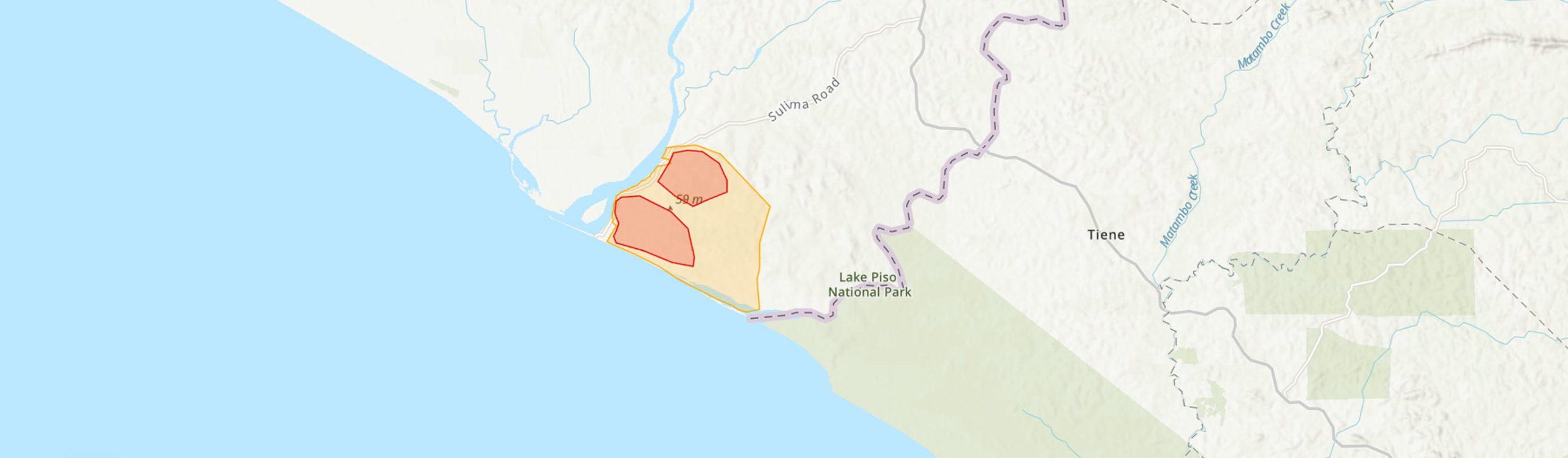
Central co-ordinates: 6.96486 N, 11.5711 W
Area: 57km²
Qualifying IPA Criteria
A(i)Site contains one or more globally threatened species, C(iii)Site contains nationally threatened or restricted habitat or vegetation types, AND/OR habitats that have severely declined in extent nationally
IPA assessment rationale
This IPA qualifies under criterion A(i) as it contains significant populations of two threatened species. It also triggers criterion C(iii) for containing the nationally threatened costal park savanna with endemic Habropetalum dawei species, which is in the only endemic genus in the country.
Site description
The Sulima IPA is situated on the southern coast of Sierra Leone, approximately 10 km from the Liberian border. It is named after the nearby coastal town of Sulima, located at the mouth of the Moa River where it flows into the Atlantic Ocean. The site contains areas of primary forest (Turubanova et al. 2018) and is one of only two known localities for Habropetalum dawei, a species of exceptional conservation importance. Habropetalum is the sole genus endemic to Sierra Leone, making it a flagship species for national plant conservation.
Botanical significance
This site contains the only recently confirmed habitat for the Endangered endemic plant Habropetalum dawei, a scrambling woody shrub or liana and grows up to 20 metres tall into the canopy (Airy Shaw 1951). This plant belongs to a distinct lineage of plants of the family Diconophyllaceae, which contains three monotypic genera. H. dawei is on the borderline Evolutionarily Distinct and Globally Endangered (EDGE) list, i.e. is threatened species with an EDGE score above the median in 80% of the trees (F. Forest pers. comms. 2025). It is known locally as Sangi in Mende and Jului in Vai. Its distribution is highly localised to approx. a 40km stretch of coastline, though it may be locally dominant within suitable habitat. H. dawei shows preference for flooded scrub and forested habitats on old beach sand substrates, but demonstrates resilience in disturbed areas through its ability to resprout from woody rootstock (Airy Shaw 1951, Svahnström et al. 2023), with its restricted distribution likely attributable to large fruits with low dispersal capacity. The site also supports Fegimanra acuminatissima (VU), a rare shrub or tree recorded in coastal park savanna in Sierra Leone and Liberia.
Additional white sand coastal species of botanical significance may occur in the area, though further botanical surveys are needed for confirmation, with notable target species including Eugenia liberiana (EN), a near-endemic tree not recorded in Sierra Leone since 1932, and Eulophia distans (CR in draft), an endemic orchid adapted to sandy substrates. Several species currently known only from Liberia possess suitable habitat within the IPA and may be discovered through further botanical surveys, including Trichoscypha laxissima (EN) from lowland sandy forests, Englerodendron libassum (CR), and Dinklageodoxa scandens (not assessed), highlighting the potential for significant botanical discoveries that could further enhance the conservation importance of this remarkable coastal ecosystem.
Habitat and geology
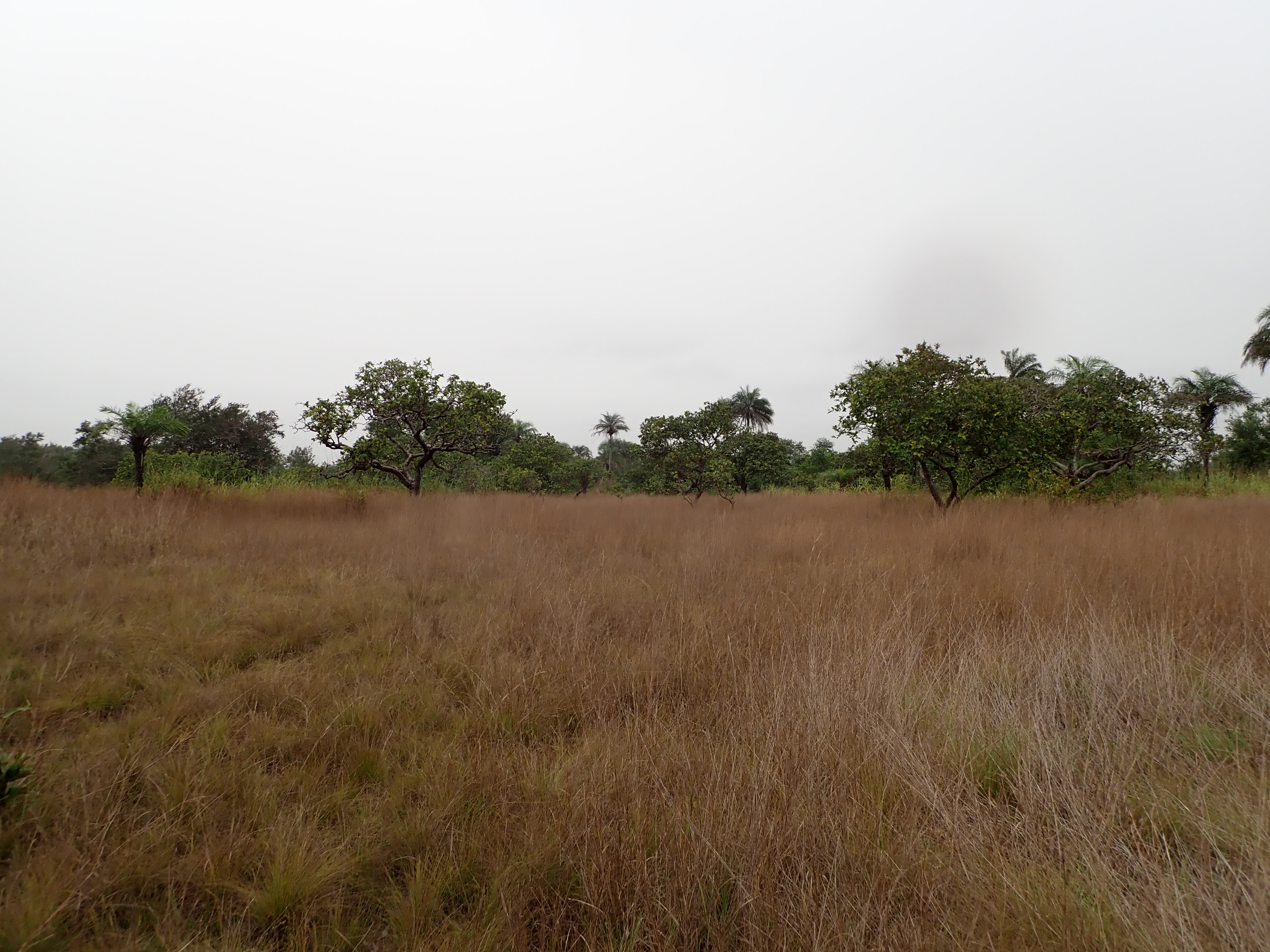
The Sulima IPA encompasses a diverse range of habitats. The site features several distinct vegetation types including coastal park savanna, mangrove swamps, riverine forest, and coastal thickets (Cole 1968), with large freshwater lake swamps occurring behind coastal dunes. The coastal park savanna represents a distinctive mosaic of tree savanna established on sandy flats characterized by white sandy substrates, supporting dominant species such as Chrysobalanus spp., Parinari macrophylla, and Terminalia scutifera. Coastal dune thickets form dense tangles of climbers and shrubs including Glyphaea brevis and Ximenia americana (Cole 1968). Mangrove swamps are found along the Moa River and its tributaries, and are dominated by Rhizophora racemosa. Farmbush areas at the site support secondary vegetation composed of Elaeis guineensis, Neocarya macrophylla, Parinari excelsa, and various grass species. The geological foundation of these varied habitats consists primarily of sandy coastal deposits and alluvial sediments that have been shaped by marine and fluvial processes.
Conservation issues
The Sulima IPA faces several significant conservation challenges that threaten its biodiversity and ecological integrity, including deforestation for timber extraction and agricultural expansion, particularly for palm oil cultivation, slash-and-burn agricultural practices that alter floristic composition through fire regimes, and habitat conversion for rice farming, urban expansion, and road construction (Martin and Burgess 2022). Additional threats include pollution from human settlements and upstream activities, with an absence of proper waste management services in the region, as well as potential climate change impacts such as rising sea levels and increased salinity levels affecting terrestrial vegetation. The Habropetalum dawei populations, for which this site serves as the primary habitat, face particular conservation concerns as the species is restricted to a small stretch of habitat, with most of its known global distribution confined to this IPA. While the plant exhibits resilience by resprouting from woody rootstock in disturbed areas and can be observed over long stretches of suitable habitat, the persistent disturbance regime prevents regular flowering, with local communities in Sulima, Juring, and Kuranko reporting that they have not observed this species in flower. H. dawei holds considerable value for local communities, serving as construction material particularly for rope-making in daily tasks, as a traditional fish stunning agent due to its alkaloid properties, and as a source of Habropetaline A, a natural metabolite with demonstrated antimalarial activity against Plasmodium falciparum (Bringmann et al., 2003). The conservation of habitat at this site is critical for the continued persistence of H. dawei, as the species' restricted distribution, vulnerability to disturbance, and significant cultural and potential pharmaceutical value make maintaining the ecological integrity of this IPA essential for both biodiversity conservation and the preservation of traditional knowledge systems that depend on this species.
Ecosystem services
The ecosystems within Sulima provide a wide range of important services. Coastal dune vegetation acts as a critical natural barrier, offering erosion control and serving as a buffer against extreme tidal events. This service is vital for maintaining the stability of the coastal landscape and protecting inland areas from potential damage. Mangroves and wetlands also play a crucial role in flood regulation, reducing the risk of inundation in surrounding areas during heavy rains or storm surges. The biodiversity rich habitats of Sulima also provide provisioning services, such as fish, medicinal plants, and timber, which support the livelihoods of local communities. The IPA is also part of the Guinean Forests of West Africa Biodiversity Hotspot, underscoring its global ecological value and the need for its conservation.
Site assessor(s)
Assessed by:
Reviewed by:
Gabriella Hoban, Royal Botanic Gardens, Kew
Aiah Lebbie, The University of Sierra Leone
Jonathan Johnny, Njala University
Momoh Plato Sesay, Njala University
Samuel Sokpo, Eastern Technical University
Xander van der Burgt, Royal Botanic Gardens, Kew
Date of first assessment: 31st Oct 2024
Date of latest reassessment: 1st May 2025
Reviewed by:
Martin Cheek, The Royal Botanic Gardens Kew
Fanny Massally, The Royal Botanic Gardens, Kew
IPA criterion A species
| Species | Qualifying sub-criterion | ≥ 1% of global population | ≥ 5% of national population | 1 of 5 best sites nationally | Entire global population | Socio-economically important | Abundance at site |
|---|---|---|---|---|---|---|---|
| Habropetalum dawei (Huchinson & Dalziel) Airy Shaw | A(i) |  |
|
|
 |
|
Abundant |
| Fegimanra acuminatissima Keay | A(i) | |
|
|
|
|
Occasional |
| Haplormosia monophylla (Harms) Harms | A(i) | |
|
|
|
|
Habropetalum dawei (Huchinson & Dalziel) Airy Shaw
Qualifying sub-criterion:
A(i)
≥ 1% of global population:
≥ 5% of national population:
1 of 5 best sites nationally:
Entire global population:
Socio-economically important:
Abundance at site:
Abundant
Fegimanra acuminatissima Keay
Qualifying sub-criterion:
A(i)
≥ 1% of global population:
≥ 5% of national population:
1 of 5 best sites nationally:
Entire global population:
Socio-economically important:
Abundance at site:
Occasional
Haplormosia monophylla (Harms) Harms
Qualifying sub-criterion:
A(i)
≥ 1% of global population:
≥ 5% of national population:
1 of 5 best sites nationally:
Entire global population:
Socio-economically important:
Abundance at site:
IPA criterion C qualifying habitats
| Habitat | Qualifying sub-criterion | ≥ 5% of national resource | ≥ 10% of national resource | 1 of 5 best sites nationally | Areal coverage at site |
|---|---|---|---|---|---|
| Coastal Park Savanna | C(iii) | |
|
|
Coastal Park Savanna
Qualifying sub-criterion:
C(iii)
≥ 5% of national resource:
≥ 10% of national resource:
Areal coverage at site:
General site habitats
| General site habitat | Percent coverage | Importance |
|---|---|---|
| Forest - Subtropical/Tropical Moist Lowland Forest | |
|
| Forest - Subtropical/Tropical Mangrove Forest Vegetation Above High Tide Level | |
|
| Grassland - Subtropical/Tropical Seasonally Wet/Flooded Lowland Grassland | |
|
| Wetlands (inland) - Permanent Rivers, Streams, Creeks [includes waterfalls] | |
Forest - Subtropical/Tropical Moist Lowland Forest
Percent coverage:
Importance:
Forest - Subtropical/Tropical Mangrove Forest Vegetation Above High Tide Level
Percent coverage:
Importance:
Grassland - Subtropical/Tropical Seasonally Wet/Flooded Lowland Grassland
Percent coverage:
Importance:
Wetlands (inland) - Permanent Rivers, Streams, Creeks [includes waterfalls]
Percent coverage:
Importance:
Land use types
| Land use type | Percent coverage | Importance |
|---|---|---|
| Agriculture (pastoral) | |
|
| Harvesting of wild resources | |
Agriculture (pastoral)
Percent coverage:
Importance:
Harvesting of wild resources
Percent coverage:
Importance:
Threats
| Threat | Severity | Timing |
|---|---|---|
| Agriculture & aquaculture - Annual & perennial non-timber crops - Small-holder farming | Medium | Ongoing - stable |
| Climate change & severe weather | Low | Future - inferred threat |
| Biological resource use - Hunting & collecting terrestrial animals | Medium | Ongoing - increasing |
| Pollution - Domestic & urban waste water | Low | Ongoing - trend unknown |
| Natural system modifications - Fire & fire suppression - Increase in fire frequency/intensity | Medium | Ongoing - trend unknown |
| Biological resource use - Gathering terrestrial plants - Intentional use (species being assessed is the target) | Medium | Ongoing - trend unknown |
Agriculture & aquaculture - Annual & perennial non-timber crops - Small-holder farming
Severity:
Medium
Timing:
Ongoing - stable
Climate change & severe weather
Severity:
Low
Timing:
Future - inferred threat
Biological resource use - Hunting & collecting terrestrial animals
Severity:
Medium
Timing:
Ongoing - increasing
Pollution - Domestic & urban waste water
Severity:
Low
Timing:
Ongoing - trend unknown
Natural system modifications - Fire & fire suppression - Increase in fire frequency/intensity
Severity:
Medium
Timing:
Ongoing - trend unknown
Biological resource use - Gathering terrestrial plants - Intentional use (species being assessed is the target)
Severity:
Medium
Timing:
Ongoing - trend unknown
Bibliography
The Vegetation of Sierra Leone
On the Dioncophyllaceae, a remarkable new family of flowering plants
Kew Bulletin, Vol 6, page(s) 327-347
Habropetalum dawei
The IUCN Red List of Threatened Species
Ongoing primary forest loss in Brazil, Democratic Republic of the Congo, and Indonesia
Environmental Research Letters, Vol 13(7) Available online
Habropetaline A, an antimalarial naphthylisoquinoline alkaloid from Triphyophyllum peltatum
Phytochemistry, Vol 62(3)


Recommended citation
Gabriella Hoban, Aiah Lebbie, Jonathan Johnny, Momoh Plato Sesay, Samuel Sokpo, Xander van der Burgt (2026) Tropical Important Plant Areas Explorer: Sulima (Sierra Leone). https://tipas.kew.org/site/sulima/ (Accessed on 23/08/2026)