
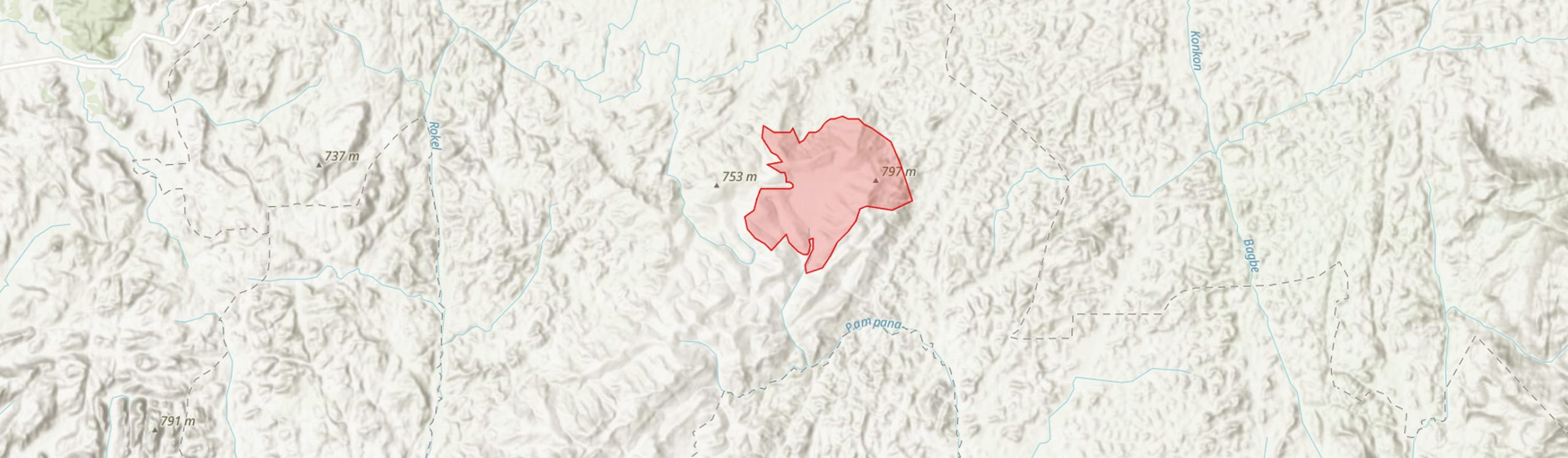
Country: Sierra Leone
Administrative region: Northern (Province)
Central co-ordinates: 9.25000 N, 11.52 W
Area: 45.8km²
Qualifying IPA Criteria
A(i)Site contains one or more globally threatened species, C(iii)Site contains nationally threatened or restricted habitat or vegetation types, AND/OR habitats that have severely declined in extent nationally
IPA assessment rationale
The Lake Sonfon IPA meets criterion A(i) by hosting three globally threatened taxa: the endangered Eremospatha dransfieldii and Pterocarpus erinaceus, and the vulnerable Pseudovigna sulanensis. Additionally, it triggers criterion C(iii) as it is nationally recognized as the best inland freshwater lake site in Sierra Leone, representing the most significant and the most threatened inland habitat in the country.
Site description
Lake Sonfon IPA is one of the largest and most significant inland lakes in Sierra Leone. It consists of fresh water and is situated at an elevation of about 550 m above sea level (TSL). The IPA comprises Lake Sonfon Sanctuary and surrounding areas. The lake is located in the northern region of Sierra Leone, with the nearest large town, Kabala, roughly 60 km to the north (Sesay et al., 2017). It lies within the Diang Chiefdom, Koinadugu District, Northern Province, about 350 km northeast of Freetown (KBA, 2021).
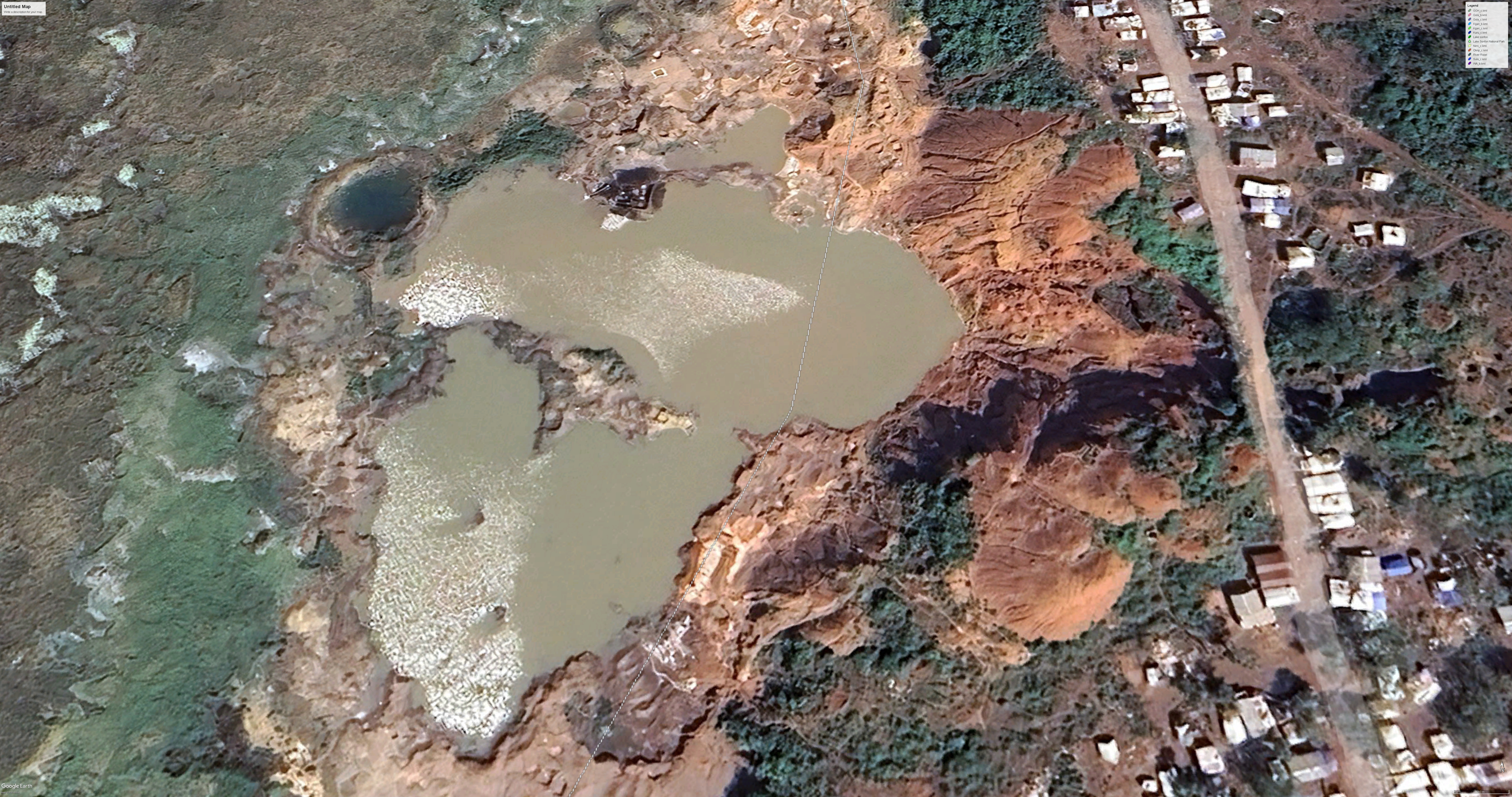
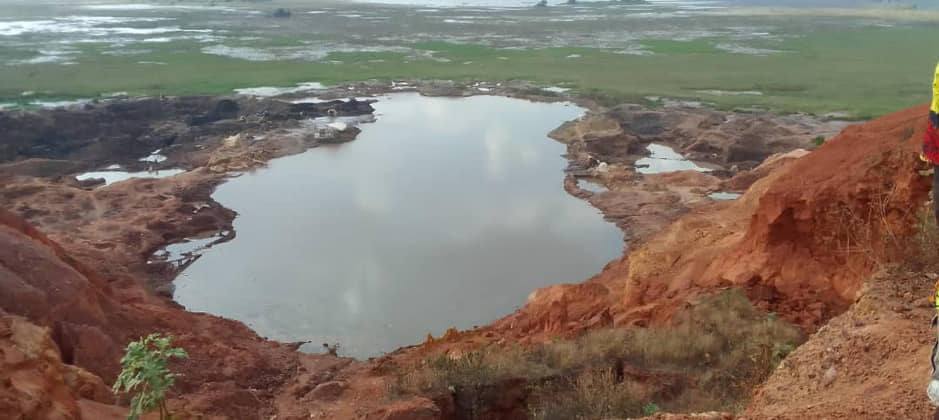
Surrounded by hills, the lake features a landscape of open grassland and wooded savanna, mixed with fringing forest and, in some areas, agricultural farm bush. It is designated as an Important Bird Area in Sierra Leone. The lake has a maximum depth of 8 m and covers an area of about 5 km², collecting water from seven small streams that drain into the lake, serving as the main water source for nearby local communities (KBA, 2021). Lake Sonfon discharges from its southern end, which forms the start of the Pampana River, while being replenished by the small streams. The water level of Lake Sonfon fluctuates considerably during the year, inundating a larger area in the rainy season (CSSL, 2021; Warnsloh, 2011). Lake Sonfon represents a symbol of traditional belief and a site for cultural ceremonies of the local people in this region (TSL, 2021).
Botanical significance
The several diverse mosaic habitats within this IPA make the range of this inland lake of considerable botanical significance. The IPA is one of the best sites for vulnerable Pseudovigna sulanensis, known only from the Sula Mountains and the Mts Béro in Guinea, and contains populations of endangered Eremospatha dransfieldii and Pterocarpus erinaceus. The two former species are found in the gallery forest, while the latter thrives in the savanna region of the IPA. The IPA has only undergone a survey for its habitat characterization and bird species but less so for its flora (CSSL, 2021), highlighting the need for further botanical research.
Habitat and geology
Nationally, wetlands in Sierra Leone face severe threats of degradation due to habitat modifications. Lake Sonfon, surrounded by hilly terrain, is a mosaic of savannah and grassland habitats, as well as gallery forest, and freshwater habitats. This IPA consists of grassland, wooded savanna, and fringing forest mixed with occasional farm bush for agricultural purposes, such as cultivating groundnuts and vegetables, engaging in apiculture, and fishing in the lake and nearby river.
The geology of this lake is comprise of steeply dipping quartz and pegmatite veins showing sulfides mineralization, with gold assay values of up to 0.67 oz/t, forming part of the larger greenstone belts of the Sula Mountains. The Lake Sonfon area, according to Warnsloh in 2011, has significant gold deposits. Annual rainfall in this region ranges from 2286 mm to 2540 mm. Mean diurnal temperatures range from 15-33 °C during the dry season and 20-27 °C during the rainy seasons, respectively. Relative humidity at 1500 hours varies annually from 40% to 70% (TSL, 2021).
Conservation issues
The Lake Sonfon IPA is a proposed protected national park but currently lacks management plans or formal protection. The site is recognized as an important bird area and a key biodiversity area, providing excellent habitats for many waterfowl and waders as well as mammal species (Sesay et al., 2017).
Lake Sonfon IPA faces severe anthropogenic threats that, if not addressed, could result in severe damage to this vital national resource. The main threats include gold mining in the vicinity of the lake (potentially the most significant long-term threat to its ecology), deforestation and land clearing around the lake for agriculture, and high hunting pressure, especially in the surrounding forest patches (KBA, 2021).
To investigate the biodiversity and threats to the Lake Sonfon ecosystem, the CSSL provides insights into the rich biodiversity of the area, excluding flora, and the current issues on the ground. In their report, the local head of Diang Chiefdom indicated that the local community is somewhat committed to protecting parts of the lake through cultural practices. However, this commitment has had limited impact due to a lack of official governmental protection especially against mining companies (CSSL, 2021). Community members demarcate parts of the lake such as an area called Daldala, using traditional tools called "nomolie" to ward off people from mining companies and other trespassers. The chief expressed concern that the cultural preservation of Lake Sonfon has been compromised and that its cultural value may soon be lost. Additionally, activities such as slash-and-burn, timber logging, and hunting activities have also been recorded within the IPA.
The destruction of Lake Sonfon represents not only an environmental crisis but also a cultural concern and economic loss for Sierra Leone. Urgent protection of Lake Sonfon IPA is needed to safeguard its significance for heritage and to generate tourism revenue generation (through bird watching).
Ecosystem services
The area offers several ecosystem services that are of great importance to local communities in the region and empowers them. The lake itself holds significant cultural values, serving as a center of traditional beliefs and ceremonies. Annually, local people from this region, gather to offer sacrifices by offering rice and other food types in floated calabashes in the lake to appease the gods (Djinn). This particular water body is not only important to the communities but plays a vital role in honoring their heritage and connection to the land of their forefathers. Furthermore, the Important Bird Area section within this IPA is a key socioeconomic area in the country, supporting a rich biodiversity (Sesay et al.,2017).
The IPA has been found to record 115 bird species with several of them endemic birds in Sierra Leone such as: Hirundo leucosoma (CSSL, 2021 KBA, 2021) and is home to diverse wildlife such as the threatened Savanna Buffalo (Africa press, 2024). Locals have also recorded the presence of crocodiles and snakes in the Daldaja region of the lake which do not harm locals and are considered sacred.
In addition, wetlands are important biological resource, and Lake Sonfon serves as the primary source of water for local communities. It is, in fact, the only source of water during the dry season. The landscape, which is partly utilized for agricultural purposes, also provides food including honey, ground nuts and vegetables and fish. If properly managed, Lake Sonfon could have tourism potential due to its unique biodiversity values and will be good for bird watching (Africa press 2024).
Site assessor(s)
Assessed by:
Fanny Massally, Royal Botanic Gardens, Kew
Date of first assessment: 9th Mar 2026
Reviewed by:Xander van der Burgt, The Royal Botanic Gardens Kew
IPA criterion A species
| Species | Qualifying sub-criterion | ≥ 1% of global population | ≥ 5% of national population | 1 of 5 best sites nationally | Entire global population | Socio-economically important | Abundance at site |
|---|---|---|---|---|---|---|---|
| Eremospatha dransfieldii Sunderl. | A(i) |  |
|
|
|
|
Scarce |
| Pterocarpus erinaceus Poir. | A(i) | |
|
|
|
|
Frequent |
| Pseudovigna sulaensis R.Clark & Burgt | A(i) | |
|
 |
|
|
Scarce |
| Habenaria jacobii Summerh. | A(i) | |
|
|
|
|
Scarce |
Eremospatha dransfieldii Sunderl.
Qualifying sub-criterion:
A(i)
≥ 1% of global population:
≥ 5% of national population:
1 of 5 best sites nationally:
Entire global population:
Socio-economically important:
Abundance at site:
Scarce
Pterocarpus erinaceus Poir.
Qualifying sub-criterion:
A(i)
≥ 1% of global population:
≥ 5% of national population:
1 of 5 best sites nationally:
Entire global population:
Socio-economically important:
Abundance at site:
Frequent
Pseudovigna sulaensis R.Clark & Burgt
Qualifying sub-criterion:
A(i)
≥ 1% of global population:
≥ 5% of national population:
1 of 5 best sites nationally:
Entire global population:
Socio-economically important:
Abundance at site:
Scarce
Habenaria jacobii Summerh.
Qualifying sub-criterion:
A(i)
≥ 1% of global population:
≥ 5% of national population:
1 of 5 best sites nationally:
Entire global population:
Socio-economically important:
Abundance at site:
Scarce
IPA criterion C qualifying habitats
| Habitat | Qualifying sub-criterion | ≥ 5% of national resource | ≥ 10% of national resource | 1 of 5 best sites nationally | Areal coverage at site |
|---|---|---|---|---|---|
| Freshwater inland lake | C(iii) | |
|
|
Freshwater inland lake
Qualifying sub-criterion:
C(iii)
≥ 5% of national resource:
≥ 10% of national resource:
Areal coverage at site:
General site habitats
| General site habitat | Percent coverage | Importance |
|---|---|---|
| Wetlands (inland) | 70 | Major |
| Artificial - Terrestrial | 10 | Minor |
| Savana | 20 | Minor |
Wetlands (inland)
Percent coverage:
70
Importance:
Major
Artificial - Terrestrial
Percent coverage:
10
Importance:
Minor
Savana
Percent coverage:
20
Importance:
Minor
Land use types
| Land use type | Percent coverage | Importance |
|---|---|---|
| Nature conservation | |
Minor |
| Agriculture (pastoral) | |
Major |
| Agriculture (aquatic) | |
Major |
| Extractive industry | |
Major |
| Residential / urban development | |
Minor |
Nature conservation
Percent coverage:
Importance:
Minor
Agriculture (pastoral)
Percent coverage:
Importance:
Major
Agriculture (aquatic)
Percent coverage:
Importance:
Major
Extractive industry
Percent coverage:
Importance:
Major
Residential / urban development
Percent coverage:
Importance:
Minor
Threats
| Threat | Severity | Timing |
|---|---|---|
| Residential & commercial development - Housing & urban areas | Medium | Ongoing - stable |
| Agriculture & aquaculture - Annual & perennial non-timber crops - Small-holder farming | High | Ongoing - increasing |
| Energy production & mining - Mining & quarrying | High | Ongoing - increasing |
| Biological resource use - Logging & wood harvesting - Motivation Unknown/Unrecorded | High | Ongoing - stable |
| Biological resource use - Hunting & collecting terrestrial animals - Motivation Unknown/Unrecorded | High | Ongoing - stable |
Residential & commercial development - Housing & urban areas
Severity:
Medium
Timing:
Ongoing - stable
Agriculture & aquaculture - Annual & perennial non-timber crops - Small-holder farming
Severity:
High
Timing:
Ongoing - increasing
Energy production & mining - Mining & quarrying
Severity:
High
Timing:
Ongoing - increasing
Biological resource use - Logging & wood harvesting - Motivation Unknown/Unrecorded
Severity:
High
Timing:
Ongoing - stable
Biological resource use - Hunting & collecting terrestrial animals - Motivation Unknown/Unrecorded
Severity:
High
Timing:
Ongoing - stable
Protected areas
| Protected area name | Protected area type | Relationship with IPA | Areal overlap |
|---|---|---|---|
| Lake Sonfon | National Park | IPA encompasses protected/conservation area | |
| Lake Sonfon Sanctuary | Forest Reserve (conservation) | IPA encompasses protected/conservation area | |
Lake Sonfon
Protected area type:
National Park
Relationship with IPA:
IPA encompasses protected/conservation area
Areal overlap:
Lake Sonfon Sanctuary
Protected area type:
Forest Reserve (conservation)
Relationship with IPA:
IPA encompasses protected/conservation area
Areal overlap:
Conservation designation
| Designation name | Protected area | Relationship with IPA | Areal overlap |
|---|---|---|---|
| Lake Sonfon and environs | Important Bird Area | IPA encompasses protected/conservation area | 27 |
Lake Sonfon and environs
Protected area:
Important Bird Area
Relationship with IPA:
IPA encompasses protected/conservation area
Areal overlap:
27
Management type
| Management type | Description | Year started | Year finished |
|---|---|---|---|
| No management plan in place | Even though it has been proposed as a National Park and an important Bird area, there is currently no management plan for this area. | |
|
No management plan in place
Even though it has been proposed as a National Park and an important Bird area, there is currently no management plan for this area.
Year started:
Year finished:
Bibliography
Key Biodiversity Areas Partnership (2026) Key Biodiversity Areas factsheet: Lake Sonfon and environs.
Lake Sonfon: A Neglected Biodiversity-Rich Cultural Heritage
Geology and Mineral Industry of Sierra Leone
(Geologic Country Report with Emphasis on Diamonds, Gold, and Titanium), page(s) 1-50
National Tourism Board Calls for Urgent Domestic Funding Amid Lake Sonfon Concerns
Lake Sonfon and Environs


Recommended citation
Fanny Massally (2026) Tropical Important Plant Areas Explorer: Lake Sonfon and Hills (Sierra Leone). https://tipas.kew.org/site/lake-sonfon-and-hills/ (Accessed on 26/08/2026)