
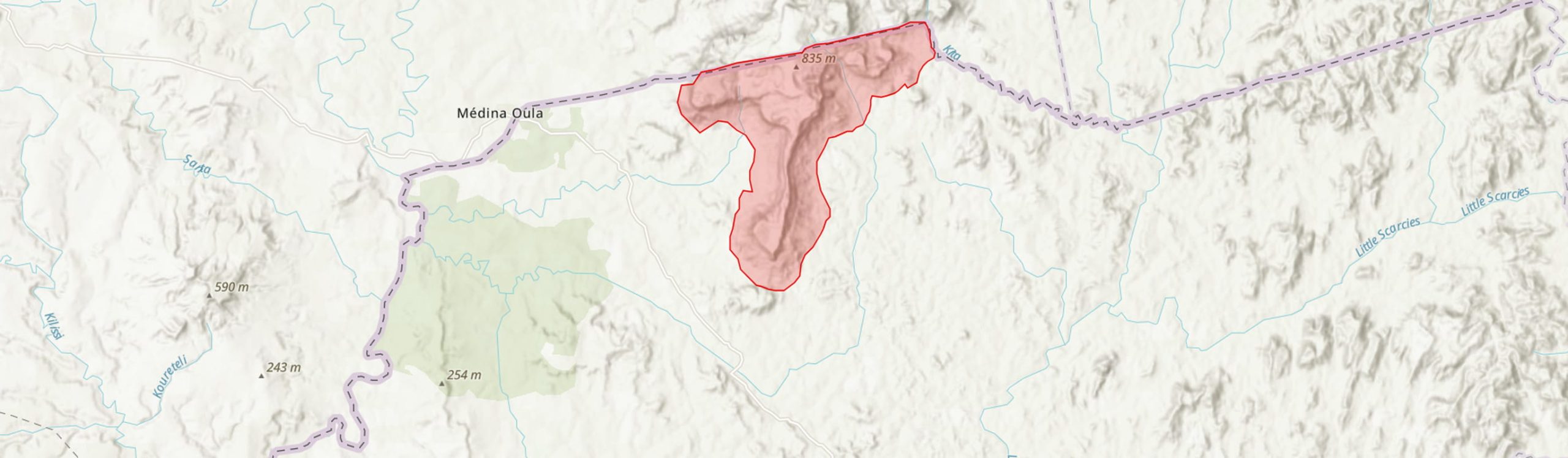
Country: Sierra Leone
Administrative region: Northern (Province)
Central co-ordinates: 9.86000 N, 12.29 W
Area: 94.3km²
Qualifying IPA Criteria
A(i)Site contains one or more globally threatened species
IPA assessment rationale
The site qualifies under criterion A(i) due to the presence of eight globally threatened plant species, including the Endangered Gilbertiodendron tonkolili and several Vulnerable taxa. Even though it contains riverine systems with threatened Podostemaceae species and remnant of the Guinean forest threatened in Sierra Leone it does not meet the threshold of triggering criterion C(iii).
Site description
The Kuru Hills IPA is located in the northern part of Sierra Leone within the West African forest-savanna transition zone. The site is largely within the Kuru hills Nature reserve, covering about 94.6 km2.
The vegetation ranges from mostly dense humid rainforest to grassy savannahs and montane grasslands. The main vegetation type is broad-leaved deciduous tree savannas with a continuous ground cover of perennial bunch grasses and forbs (Gomez Paloma and Acs 2012). Common tree species are Pterocarpus erinaceus and Parkia biglobosa, while typical grasses include Andropogon gabonensis and Andropogon tectorum (Amara et al., 2019)
Botanical significance
The IPA has a high botanical significance due to the presence of globally threatened plant species within a forest-savanna transition system. The site supports eight globally threatened taxa, including the Endangered Gilbertiodendron tonkolili and Dichaetanthera echinulata, as well as several Vulnerable species such as Chlorophytum immaculatum, Landolphia macrantha, Neolemonniera clitandrifolia, Guibourtia copallifera, Copaifera salikounda, and Stonesia heterospathella. Other species recorded include the Near Threatened Entandrophragma angolense and some common indigenous species including Combretum glutinosum, and Terminalia glaucescens.
Two species, Striga primuloides, and Chlorophytum immaculatum, represents first records for Sierra Leone, denoting the need for more research in underexplored areas that may support additional plants of conservation concern.
Habitat and geology
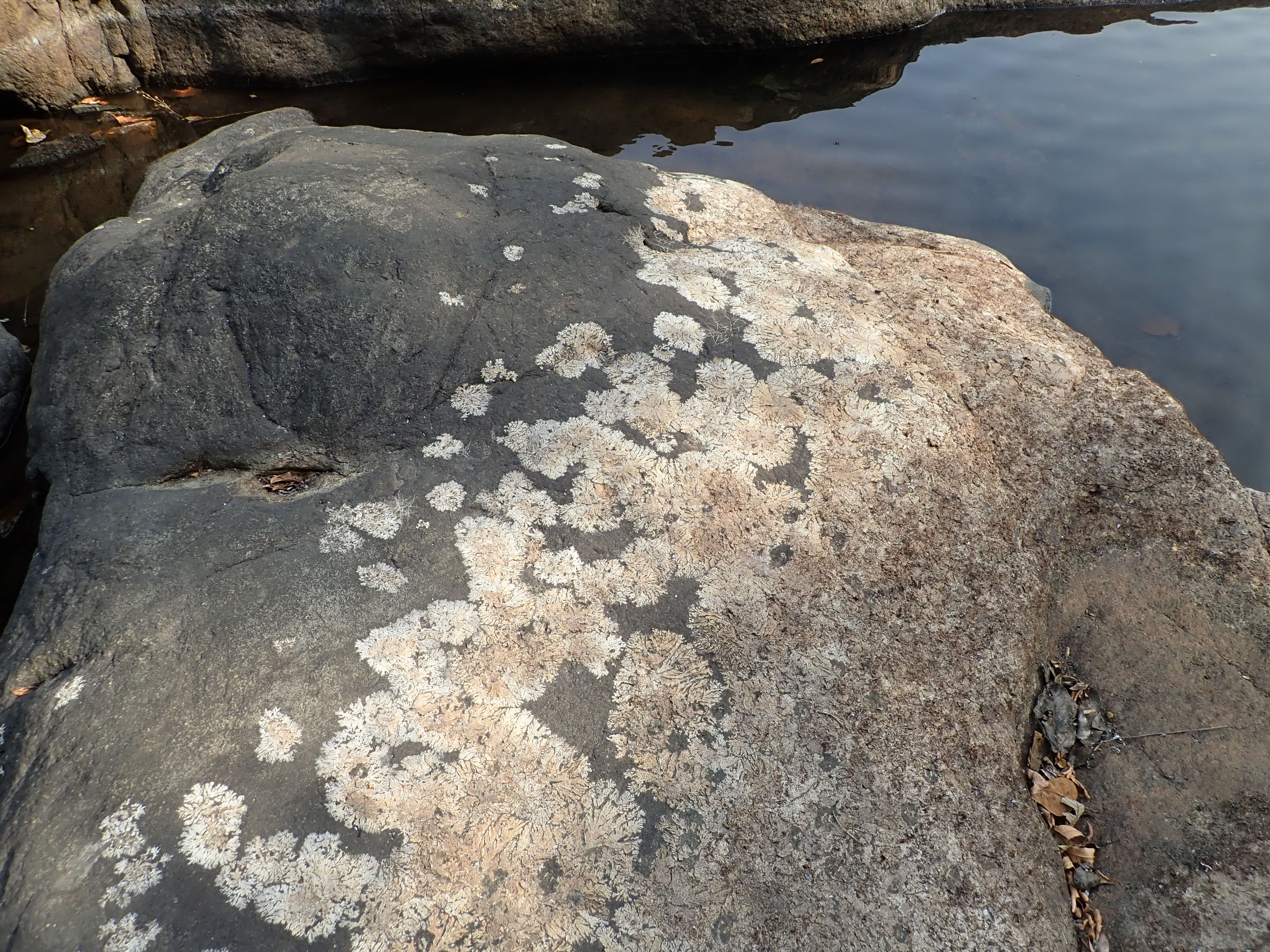
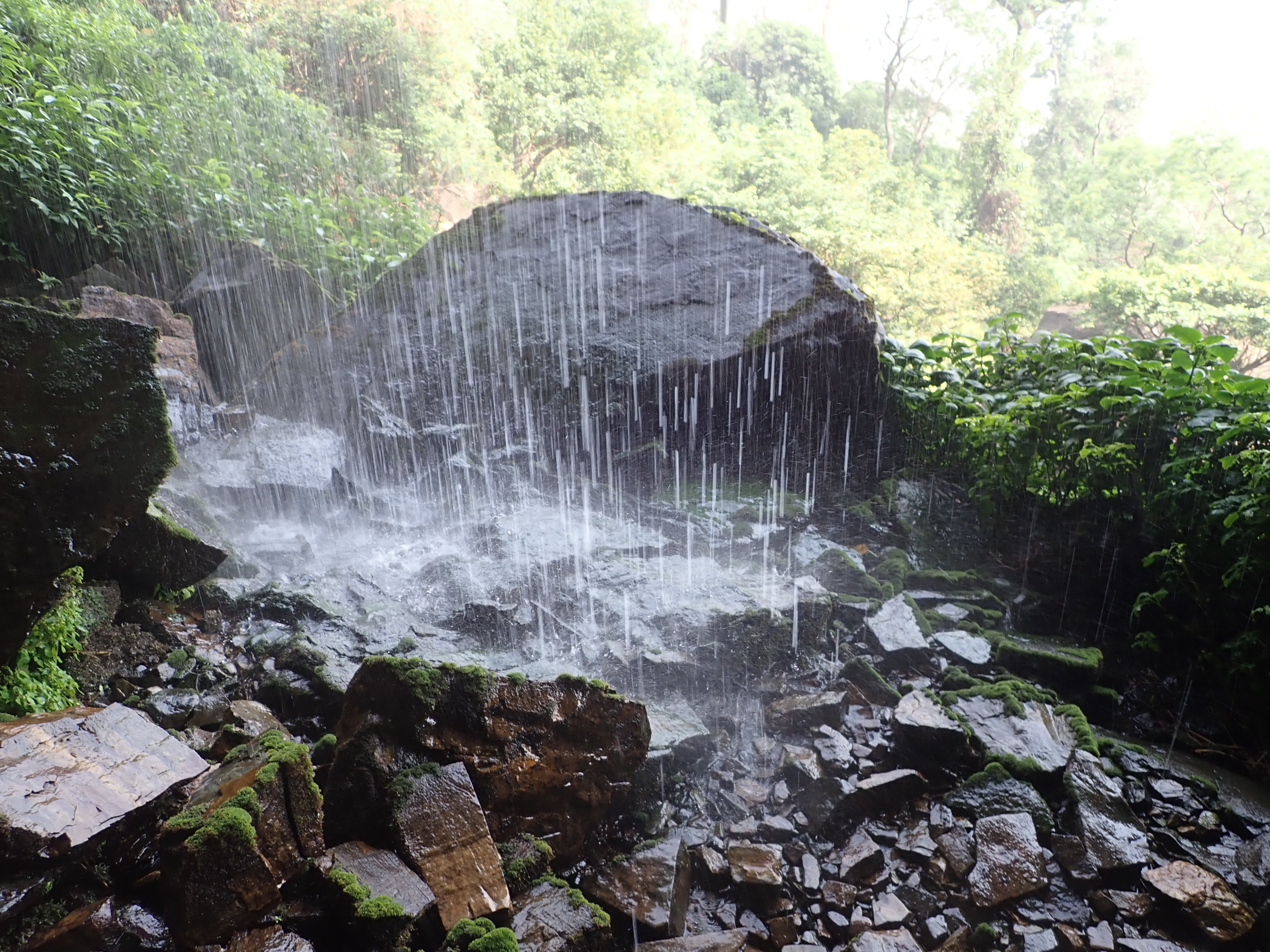
The Kuru hills IPA is made up of diverse habitats of moist forests, wooded savanna, rolling hills grassland, vertical rocks, and riverine habitats. Moist forests with deciduous or semi-evergreen species are typically associated with the forest reserve, river, and stream banks within the IPA (Amara et al., 2019). The wooded grassland is also home to important primate species such as the two Critically Endangered species (CR): the western chimpanzee (Pan troglodytes verus) and the African forest elephant (Loxodonta cyclotis).
The geology of the area is highly unique in the context of Sierra Leone, consisting of sedimentary, metasedimentary and granitic rocks of the Saionya Scarp Series extending from Guinea (Warnsloh, 2011). The climate is monsoon humid tropical, with a unimodal wet season from May to October (Gomez Paloma and Acs 2012; Amara et al., 2019). Annual mean rainfall is about 2,244 mm, and the mean temperature ranges between 23 and 29 °C (Hijmans et al. (2005). The topography of the site is characterized by low rolling hills with elevations range of 100 – 825 m above sea level (Google Earth 2026).
Conservation issues
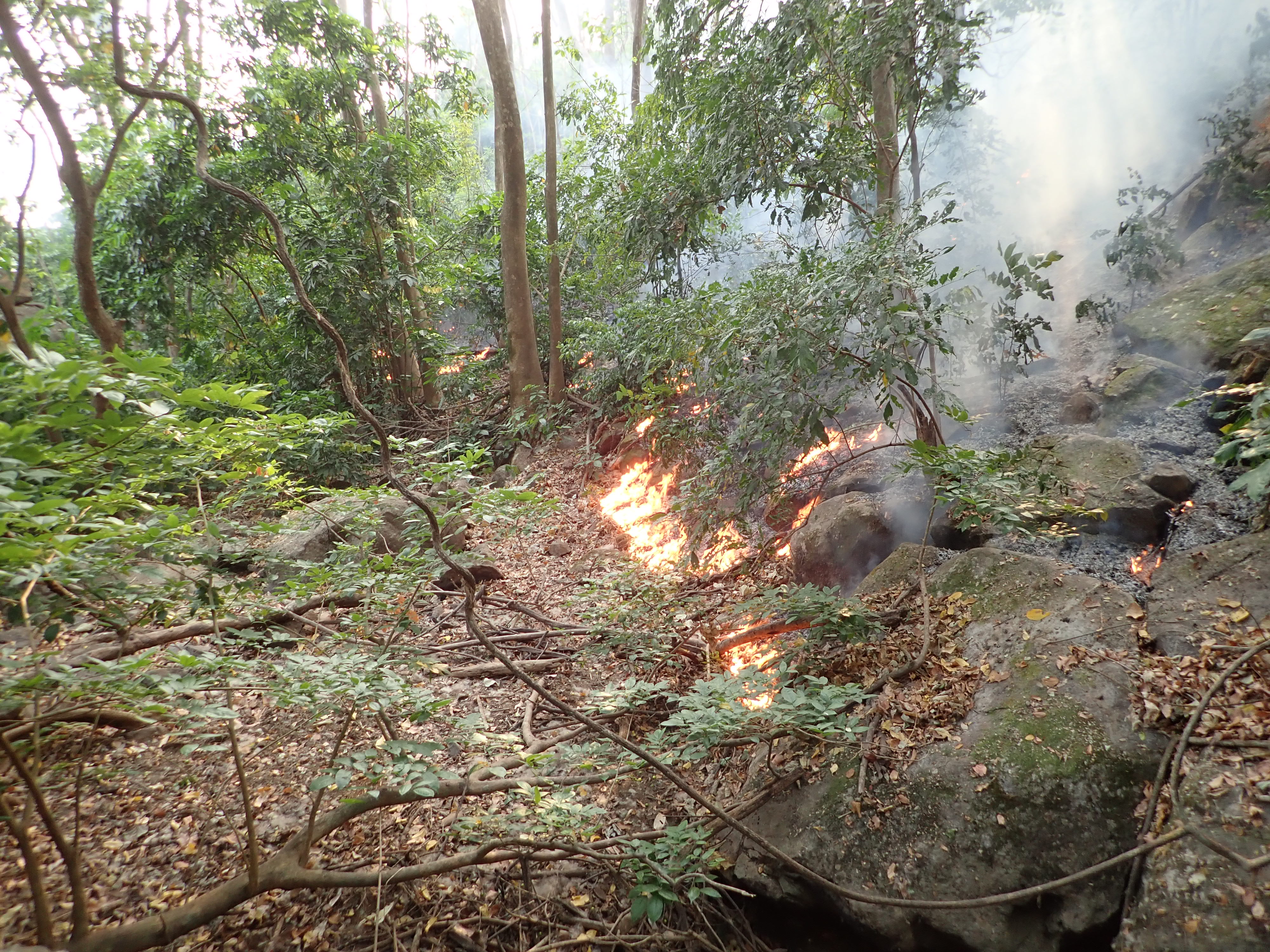
The Kuru Hills IPA is subject to illegal logging (especially exploitation of rosewood), poaching, slash and burn agriculture, bush fires, mining and general natural habitats degradation. The woodland and grassland areas are more prone to recurrent fire, while the forest habitats are more targeted by farmers and timber harvesters because of their valuable tree species and fertile soils (Amara et al., 2019).
The site is included within the PAPFor (Protected Area Programme) in the OKKPS landscape, implemented by the Wild Chimpanzee Foundation (WCF) and Tacugama Chimpanzee Sanctuary (TCS) which aims to improve forest management, combat desertification, combat land degradation, and conserve biodiversity (Gomez Paloma and Acs 2012). Even though CITES has recently banned the exploitation of rosewood in Sierra Leone, enforcement of regulations remains limited.
Ecosystem services
The Kuru hills IPA provides several ecosystem services that supports the local livelihoods of the area. Agriculture, primarily slash-and-burn cultivation, is the primary livelihood in the region, the woodland and savanna regions provide suitable habitat for agriculture for community people. The grasslands are also used for livestock farming.
The area also provides timber and other common Non-timber forest products (mainly honey, fruits, medicine and hunting) for inhabitants of the region. In additional, the IPA is a high carbon and biodiversity pool that contributes to global climate change mitigation through carbon sequestration and storage (Amara et al., 2019)
Site assessor(s)
Assessed by:
Fanny Massally, Royal Botanic Gardens, Kew
Date of first assessment: 6th Mar 2026
Reviewed by:Xander van der Burgt, The Royal Botanic Gardens Kew
IPA criterion A species
| Species | Qualifying sub-criterion | ≥ 1% of global population | ≥ 5% of national population | 1 of 5 best sites nationally | Entire global population | Socio-economically important | Abundance at site |
|---|---|---|---|---|---|---|---|
| Chlorophytum immaculatum (Hepper) Nordal | A(i) |  |
|
 |
|
|
Scarce |
| Landolphia macrantha (K.Schum.) Pichon | A(i) | |
|
|
|
|
Unknown |
| Neolemonniera clitandrifolia A.Chev. | A(i) | |
|
|
|
|
Unknown |
| Guibourtia copallifera Benn. | A(i) | |
|
|
|
|
Unknown |
| Gilbertiodendron tonkolili Burgt & Estrella | A(i) | |
|
|
|
|
Unknown |
| Copaifera salikounda Heckel | A(i) | |
|
|
|
|
Unknown |
| Dichaetanthera echinulata Hook.f. | A(i) | |
|
|
|
|
Unknown |
| Stonesia heterospathella G.Taylor | A(i) | |
|
|
|
|
Scarce |
Chlorophytum immaculatum (Hepper) Nordal
Qualifying sub-criterion:
A(i)
≥ 1% of global population:
≥ 5% of national population:
1 of 5 best sites nationally:
Entire global population:
Socio-economically important:
Abundance at site:
Scarce
Landolphia macrantha (K.Schum.) Pichon
Qualifying sub-criterion:
A(i)
≥ 1% of global population:
≥ 5% of national population:
1 of 5 best sites nationally:
Entire global population:
Socio-economically important:
Abundance at site:
Unknown
Neolemonniera clitandrifolia A.Chev.
Qualifying sub-criterion:
A(i)
≥ 1% of global population:
≥ 5% of national population:
1 of 5 best sites nationally:
Entire global population:
Socio-economically important:
Abundance at site:
Unknown
Guibourtia copallifera Benn.
Qualifying sub-criterion:
A(i)
≥ 1% of global population:
≥ 5% of national population:
1 of 5 best sites nationally:
Entire global population:
Socio-economically important:
Abundance at site:
Unknown
Gilbertiodendron tonkolili Burgt & Estrella
Qualifying sub-criterion:
A(i)
≥ 1% of global population:
≥ 5% of national population:
1 of 5 best sites nationally:
Entire global population:
Socio-economically important:
Abundance at site:
Unknown
Copaifera salikounda Heckel
Qualifying sub-criterion:
A(i)
≥ 1% of global population:
≥ 5% of national population:
1 of 5 best sites nationally:
Entire global population:
Socio-economically important:
Abundance at site:
Unknown
Dichaetanthera echinulata Hook.f.
Qualifying sub-criterion:
A(i)
≥ 1% of global population:
≥ 5% of national population:
1 of 5 best sites nationally:
Entire global population:
Socio-economically important:
Abundance at site:
Unknown
Stonesia heterospathella G.Taylor
Qualifying sub-criterion:
A(i)
≥ 1% of global population:
≥ 5% of national population:
1 of 5 best sites nationally:
Entire global population:
Socio-economically important:
Abundance at site:
Scarce
IPA criterion C qualifying habitats
| Habitat | Qualifying sub-criterion | ≥ 5% of national resource | ≥ 10% of national resource | 1 of 5 best sites nationally | Areal coverage at site |
|---|---|---|---|---|---|
| Waterfalls with endemic Podostemaceae | C(i) | |
|
|
|
| Low-altitude evergreen forest and gallery forest | C(i) | |
|
|
Waterfalls with endemic Podostemaceae
Qualifying sub-criterion:
C(i)
≥ 5% of national resource:
≥ 10% of national resource:
Areal coverage at site:
Low-altitude evergreen forest and gallery forest
Qualifying sub-criterion:
C(i)
≥ 5% of national resource:
≥ 10% of national resource:
Areal coverage at site:
General site habitats
| General site habitat | Percent coverage | Importance |
|---|---|---|
| Savanna - Moist Savanna | |
|
| Forest - Subtropical/Tropical Moist Montane Forest | |
|
| Grassland - Subtropical/Tropical High Altitude Grassland | |
|
| Wetlands (inland) - Permanent Rivers, Streams, Creeks [includes waterfalls] | |
Savanna - Moist Savanna
Percent coverage:
Importance:
Forest - Subtropical/Tropical Moist Montane Forest
Percent coverage:
Importance:
Grassland - Subtropical/Tropical High Altitude Grassland
Percent coverage:
Importance:
Wetlands (inland) - Permanent Rivers, Streams, Creeks [includes waterfalls]
Percent coverage:
Importance:
Land use types
| Land use type | Percent coverage | Importance |
|---|---|---|
| Nature conservation | 60 | Major |
| Agriculture (arable) | 10 | Minor |
| Agriculture (pastoral) | 10 | Minor |
| Tourism / Recreation | 10 | Minor |
| Extractive industry | 10 | Unknown |
Nature conservation
Percent coverage:
60
Importance:
Major
Agriculture (arable)
Percent coverage:
10
Importance:
Minor
Agriculture (pastoral)
Percent coverage:
10
Importance:
Minor
Tourism / Recreation
Percent coverage:
10
Importance:
Minor
Extractive industry
Percent coverage:
10
Importance:
Unknown
Protected areas
| Protected area name | Protected area type | Relationship with IPA | Areal overlap |
|---|---|---|---|
| Kuru Hills Forest Reserve | Forest Reserve (conservation) | IPA encompasses protected/conservation area | |
Kuru Hills Forest Reserve
Protected area type:
Forest Reserve (conservation)
Relationship with IPA:
IPA encompasses protected/conservation area
Areal overlap:
Management type
| Management type | Description | Year started | Year finished |
|---|---|---|---|
| Protected Area management plan in place | |
|
Protected Area management plan in place
Year started:
Year finished:
Bibliography
Very high-resolution interpolated climate surfaces for Global land areas
International Journal of Climatology, Vol 25, page(s) 1965-1978
Geology and Mineral Industry of Sierra Leone
(Geologic Country Report with Emphasis on Diamonds, Gold, and Titanium), page(s) 1-50
Relationship between carbon stocks and tree species diversity in a humid Guinean savanna landscape in northern Sierra Leone.
Southern Forests, Vol 81(3), page(s) 235–245
Rural poverty reduction and food security: The case of smallholders in Sierra Leone.
Luxembourg: Publications Office of the European Union


Recommended citation
Fanny Massally (2026) Tropical Important Plant Areas Explorer: Kuru Hills (Sierra Leone). https://tipas.kew.org/site/kuru-hills/ (Accessed on 27/08/2026)