
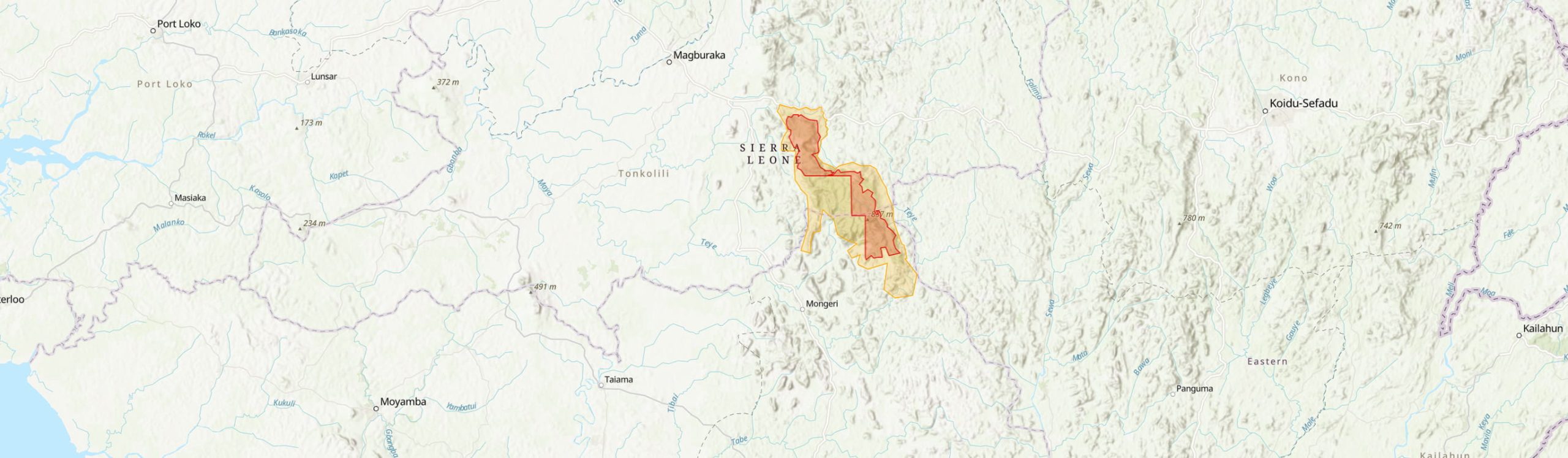
Country: Sierra Leone
Administrative region: Southern (Province)
Central co-ordinates: 8.51000 N, 11.67 W
Area: 328.9km²
Qualifying IPA Criteria
A(i)Site contains one or more globally threatened species, C(i)Site contains globally threatened or restricted habitat or vegetation types
IPA assessment rationale
This site qualifies as an IPA due to the presence of at least seven threatened species that trigger criterion A(i), as well as criterion C(i) as this site contains >10% of threatened low altitude evergreen forest habitat nationally.
Site description
The Kangari Hills IPA is located across the boundary of Tonkolili and Bo Districts, spanning the Northern and Southern Provinces of Sierra Leone. It falls within the Kunike Barina Chiefdom. The nearest large towns are Baomahun on the southern border of the IPA, Matotaka, approximately 10 km to the northwest, and Yele, about 12 km to the southwest.
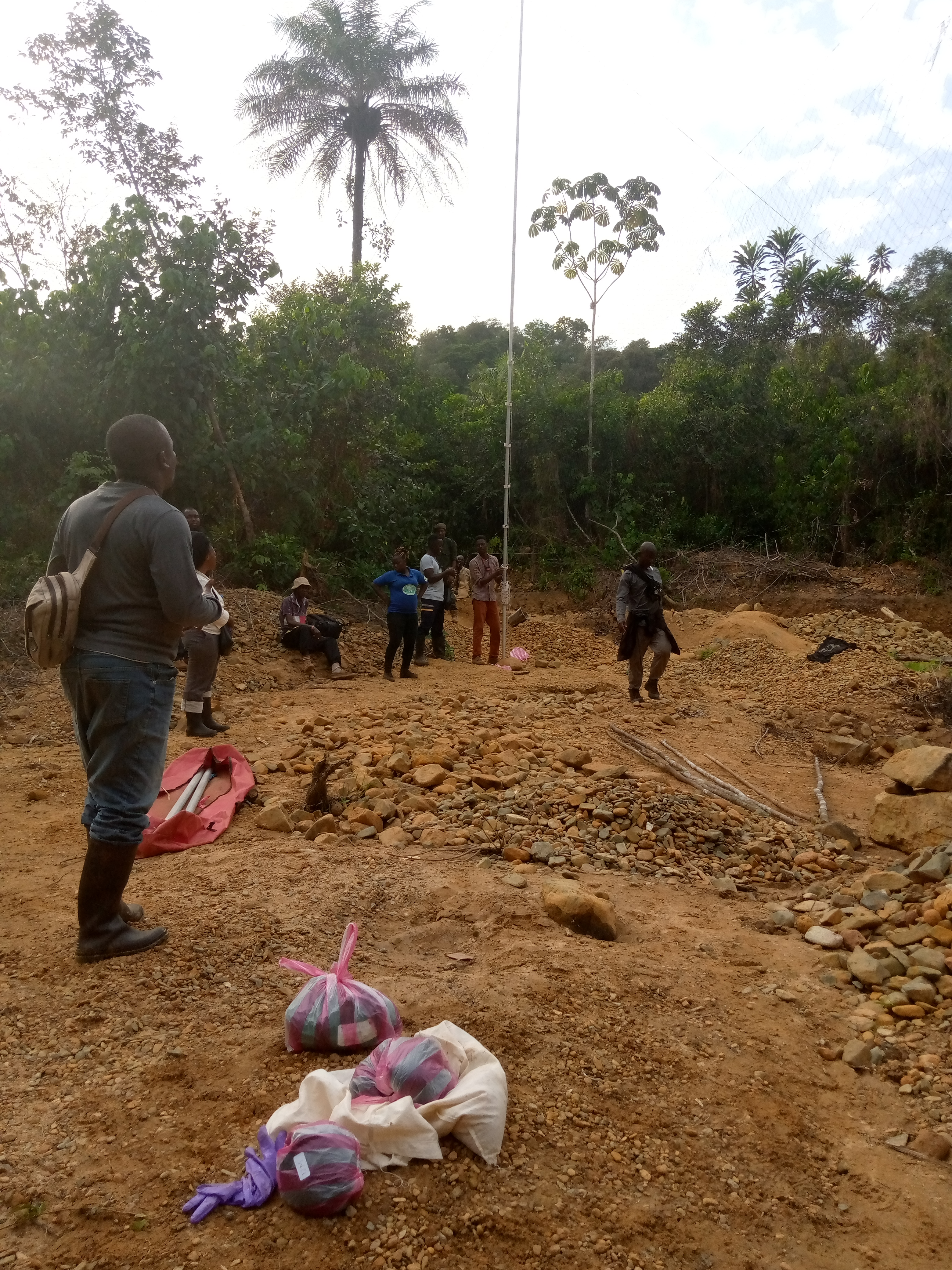
This IPA corresponds to the Kangari Hills Forest Reserve (KHFR), a forest reserve designated for utilization. In 2021, a large-scale gold mining license was granted to FL Gold Limited, with 27% of the IPA now occupied by the mining concession (GoSL, 2024). Mining activities are expected to continue until the lease expires in 2091 and are anticipated to have substantial long-term impacts on the site. Additionally, a smaller gold mining license (0.23 km²) was granted to XIN YIN Company Limited from 2021 to 2033 along a northern waterway, but this license is currently suspended.
The IPA’s core boundary has been delineated to reflect the most intact habitat remaining outside the main mining concession. This area is considered the highest priority for protection and was defined in consultation with the Director of Forestry, Mrs. Karemo-Garnett (pers. comms. 2025).
Botanical significance
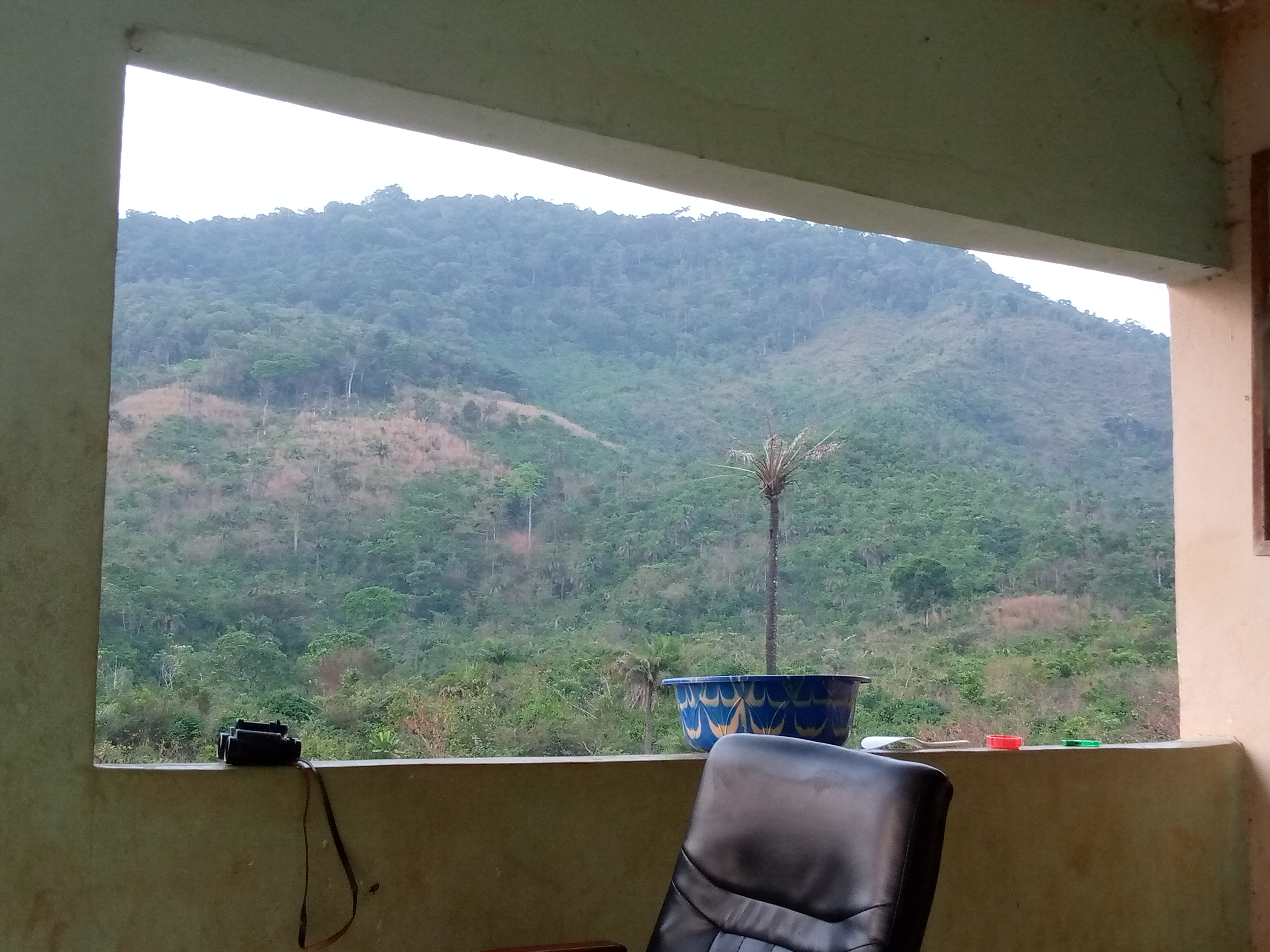
The Kangari Hills IPA supports one of the largest remaining areas of primary forest in Sierra Leone (GFW, 2011) and lies within the Guinean Forests of West Africa Biodiversity Hotspot (CEPF, 2015). The site is of high botanical importance due to its botanical richness and the presence of globally threatened species. A recent survey recorded 68 tree species from 38 families within the Kangari Hills Forest Reserve (Fayiah et al., 2022), highlighting the site's conservation value.
Several plant species of global conservation concern have been recorded within the IPA. Oxyanthus andjigae (Luke #15205), an Endangered tree, is known from only four localities globally, with this site representing the only confirmed occurrence in Sierra Leone. Placodiscus pseudostipularis, also known from the site and listed as Endangered, is a small tree restricted to relatively undisturbed moist forest in the Upper Guinea region. Cassia aubrevillei (Luke #15145), another Endangered species, is known in Sierra Leone only from this locality.
Additional threatened species documented at the site include Cryptosepalum tetraphyllum, Guibourtia leonensis, and Lophira alata, are all valuable timber species assessed as Vulnerable. The site also provides habitat for the near-endemic liana Landolphia macrantha (Vulnerable), which is threatened across most of its range in Sierra Leone.
A possible occurrence of Tarenna hutchinsonii (Luke #15263), a Critically Endangered tree species previously known only from a single historical collection in Sierra Leone, was noted during surveys; however, due to uncertainty in the identification, this record has not been included in the formal assessment. The Upper Guinea endemics Asystasia scandens and Sclerochiton vogelii subsp. vogelii have also been recorded at the site, although both taxa remain unassessed for extinction risk.
Habitat and geology
The Kangari Hills IPA is characterised by lowland evergreen forest (Cole, 1968), with some riverine forest and minimal representation of deciduous forest (ESA, 2017). While the core area remains largely intact, the forest edges show significant signs of disturbance, ranging from farmbush to secondary forest stands. Ochthocosmus africanus (syn. Phyllocosmus africanus, Ixonanthaceae) has been identified as a dominant tree species within the site (Kargbo et al., 2022), indicating the presence of secondary forest structure (Savill & Fox, 1967). Geologically, the Kangari Hills lie within the Sula Mountain greenstone belt. This formation is rich in economically valuable minerals, including diamonds.
Conservation issues
There is currently extensive artisianal gold mining occurring along the northeastern periphery of the IPA, as well as within the formal mining lease area. These activities are contributing to ongoing habitat degradation. Since 2001, primary forest cover has declined dramatically, particularly in the southern portion of the reserve, which is now highly fragmented and largely degraded. Slash and burn agriculture is steadily eroding remnant forest at the site.
Ecosystem services
The Kangari Hills IPA provides key ecosystem services to surrounding communities, particularly through the provision of non-timber forest products (NTFPs) (Kargbo et al., 2022). These products contribute significantly to local livelihoods, offering income, nutritional value, cultural importance and medicines.
Site assessor(s)
Assessed by:
Gabriella Hoban, Royal Botanic Gardens, Kew
Date of first assessment: 1st May 2025
Reviewed by:Xander van der Burgt, The Royal Botanic Gardens Kew
Fanny Massally, The Royal Botanic Gardens, Kew
IPA criterion A species
| Species | Qualifying sub-criterion | ≥ 1% of global population | ≥ 5% of national population | 1 of 5 best sites nationally | Entire global population | Socio-economically important | Abundance at site |
|---|---|---|---|---|---|---|---|
| Guibourtia leonensis J. L�onard | A(i) |  |
|
|
 |
|
|
| Landolphia macrantha (K.Schum.) Pichon | A(i) | |
|
|
|
|
|
| Lophira alata Banks ex Gaertn.f. | A(i) | |
|
|
|
|
|
| Placodiscus pseudostipularis Radlk. | A(i) | |
|
|
|
|
|
| Oxyanthus andjigae Sonké & O.Lachenaud | A(i) | |
|
|
|
|
|
| Cryptosepalum tetraphyllum (Hook.f.) Benth. | A(i) | |
|
|
|
|
|
| Cassia aubrevillei Pellegr. | A(i) | |
|
|
|
|
Guibourtia leonensis J. L�onard
Qualifying sub-criterion:
A(i)
≥ 1% of global population:
≥ 5% of national population:
1 of 5 best sites nationally:
Entire global population:
Socio-economically important:
Abundance at site:
Landolphia macrantha (K.Schum.) Pichon
Qualifying sub-criterion:
A(i)
≥ 1% of global population:
≥ 5% of national population:
1 of 5 best sites nationally:
Entire global population:
Socio-economically important:
Abundance at site:
Lophira alata Banks ex Gaertn.f.
Qualifying sub-criterion:
A(i)
≥ 1% of global population:
≥ 5% of national population:
1 of 5 best sites nationally:
Entire global population:
Socio-economically important:
Abundance at site:
Placodiscus pseudostipularis Radlk.
Qualifying sub-criterion:
A(i)
≥ 1% of global population:
≥ 5% of national population:
1 of 5 best sites nationally:
Entire global population:
Socio-economically important:
Abundance at site:
Oxyanthus andjigae Sonké & O.Lachenaud
Qualifying sub-criterion:
A(i)
≥ 1% of global population:
≥ 5% of national population:
1 of 5 best sites nationally:
Entire global population:
Socio-economically important:
Abundance at site:
Cryptosepalum tetraphyllum (Hook.f.) Benth.
Qualifying sub-criterion:
A(i)
≥ 1% of global population:
≥ 5% of national population:
1 of 5 best sites nationally:
Entire global population:
Socio-economically important:
Abundance at site:
Cassia aubrevillei Pellegr.
Qualifying sub-criterion:
A(i)
≥ 1% of global population:
≥ 5% of national population:
1 of 5 best sites nationally:
Entire global population:
Socio-economically important:
Abundance at site:
IPA criterion C qualifying habitats
| Habitat | Qualifying sub-criterion | ≥ 5% of national resource | ≥ 10% of national resource | 1 of 5 best sites nationally | Areal coverage at site |
|---|---|---|---|---|---|
| Low-altitude evergreen forest and gallery forest | C(i) | |
|
|
266 |
Low-altitude evergreen forest and gallery forest
Qualifying sub-criterion:
C(i)
≥ 5% of national resource:
≥ 10% of national resource:
Areal coverage at site:
266
General site habitats
| General site habitat | Percent coverage | Importance |
|---|---|---|
| Forest - Subtropical/Tropical Moist Lowland Forest | |
|
| Artificial - Terrestrial - Subtropical/Tropical Heavily Degraded Former Forest | |
|
| Artificial - Aquatic - Excavations (open) | |
Forest - Subtropical/Tropical Moist Lowland Forest
Percent coverage:
Importance:
Artificial - Terrestrial - Subtropical/Tropical Heavily Degraded Former Forest
Percent coverage:
Importance:
Artificial - Aquatic - Excavations (open)
Percent coverage:
Importance:
Land use types
| Land use type | Percent coverage | Importance |
|---|---|---|
| Extractive industry | 27 | Major |
| Harvesting of wild resources | |
Minor |
Extractive industry
Percent coverage:
27
Importance:
Major
Harvesting of wild resources
Percent coverage:
Importance:
Minor
Threats
| Threat | Severity | Timing |
|---|---|---|
| Agriculture & aquaculture - Annual & perennial non-timber crops - Small-holder farming | High | Ongoing - stable |
| Energy production & mining - Mining & quarrying | High | Ongoing - stable |
| Biological resource use - Gathering terrestrial plants | Low | Ongoing - stable |
| Natural system modifications - Fire & fire suppression - Increase in fire frequency/intensity | Medium | Ongoing - stable |
Agriculture & aquaculture - Annual & perennial non-timber crops - Small-holder farming
Severity:
High
Timing:
Ongoing - stable
Energy production & mining - Mining & quarrying
Severity:
High
Timing:
Ongoing - stable
Biological resource use - Gathering terrestrial plants
Severity:
Low
Timing:
Ongoing - stable
Natural system modifications - Fire & fire suppression - Increase in fire frequency/intensity
Severity:
Medium
Timing:
Ongoing - stable
Protected areas
| Protected area name | Protected area type | Relationship with IPA | Areal overlap |
|---|---|---|---|
| Kangari Hills Forest Reserve | National Reserve | IPA encompasses protected/conservation area | 98 |
Kangari Hills Forest Reserve
Protected area type:
National Reserve
Relationship with IPA:
IPA encompasses protected/conservation area
Areal overlap:
98
Bibliography
Global Forest Watch
The Vegetation of Sierra Leone
The Trees of Sierra Leone
Land Cover CCI Product User Guide Version 2. Tech. Rep.
The role of non-timber forest products in rural poverty reduction around the Kangari Hills Forest Reserve, northern Sierra Leone
American Journal of Multidisciplinary Research & Development, Vol 4, page(s) 16-29
Plant Diversity and Regeneration Potentials in Forest Protected Areas of Sierra Leone
Ecosystem Profile: Guinean Forests of West Africa Biodiversity Hotspot

Recommended citation
Gabriella Hoban (2026) Tropical Important Plant Areas Explorer: Kangari Hills (Sierra Leone). https://tipas.kew.org/site/kangari-hills/ (Accessed on 26/08/2026)