
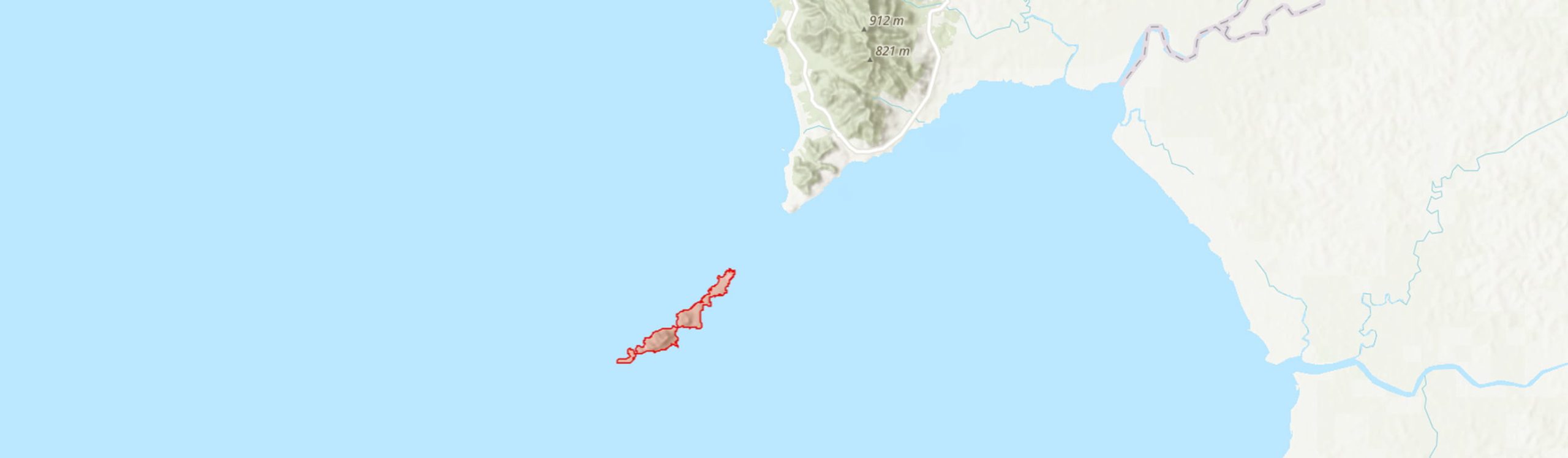
Country: Sierra Leone
Administrative region: Western Area (Region)
Central co-ordinates: 8.11647 N, 13.21159 E
Area: 5.3km²
Qualifying IPA Criteria
A(i)Site contains one or more globally threatened species
IPA assessment rationale
The Banana Island archipelagos qualify as an IPA under criterion A(i), due to records of seven vulnerable species, Turraeanthus africana, Garcina kola, Milicia regia, Ixora nigerica, Sterculia oblonga, Afzelia africana, and Zanthoxylum atchoum with three additional three near-endemic species. Even though this IPA forms part of the remnant of the west African lowland evergreen and gallery forest, it does not trigger criteria C(iii). As a nationally threatened habitat it could house several other endemic species if more research is done.
Site description
The Banana Island Archipelagos IPA, an area less than 6 km² lies off the southwestern coast of the Freetown Peninsula, Sierra Leone (Showers, 2015). It is an extension of the Freetown peninsula area, with a distance of about 40 km away from Freetown and a coastline length of approximately 1350 km. The island is made up of three archipelagos: Dublin, Ricketts and Mes Meheux (also known as Mesmieu). The two largest islands, Dublin and Ricketts, are inhabited and connected by a small land bridge that is covered at high tide, whereas Mes Meheux is uninhabited (Showers, 2015). Mes-Meheux, the third archipelago, remains pristine and uninhabited .
The Portuguese first named the islands "Banana Islands" because their outline of them resembled a bunch of bananas (Garber, 2016). Dublin and Ricketts Islands have a combined population of about 900 people.
Botanical significance
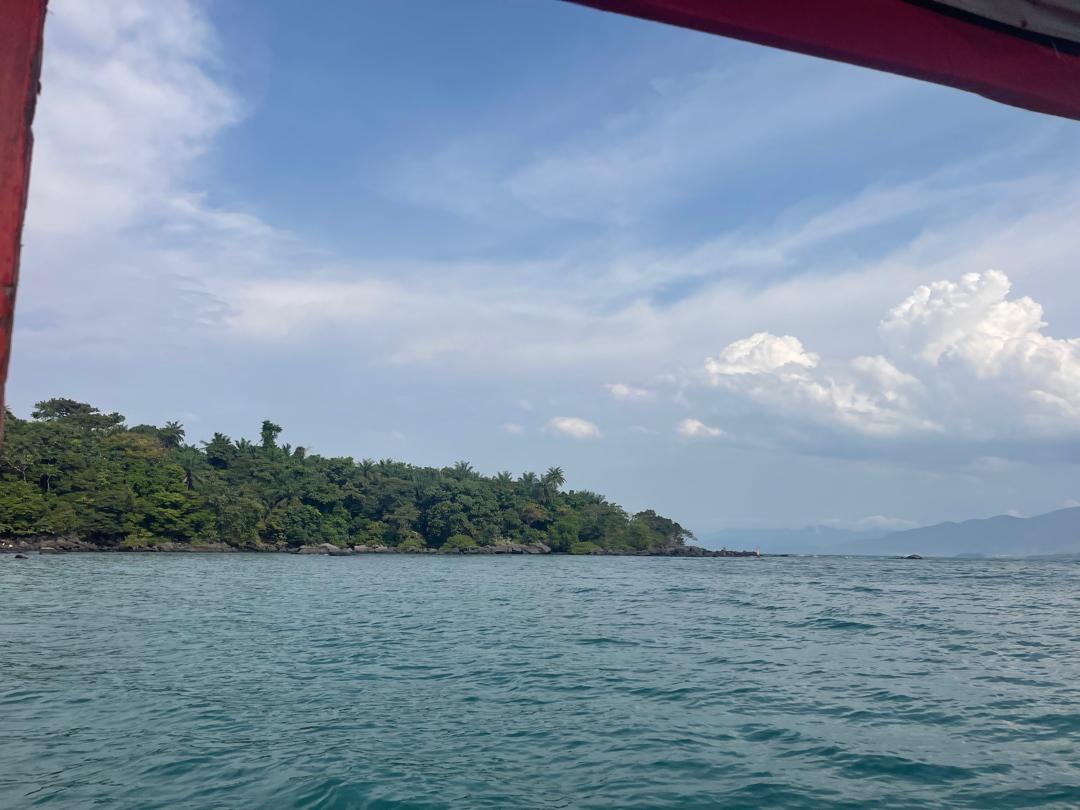
This IPA represents a pristine lowland forest that has been significantly degraded in Sierra Leone, particularly in the nearby Freetown Peninsula area. It has potential to harbour useful plant species that are heavily impacted in Freetown. The site is home to seven threatened species, including the vulnerable Turraeanthus africana, Garcina kola, Afzelia african, Milicia regia, Ixora nigerica, Sterculia oblonga, and Zanthoxylum atchoum. Notably, three of these species are narrow endemics that have only been recorded in this area within the country. In addition to these threatened species, several other useful species have been recorded in this site. Limited research has been conducted in this area when it comes to flora diversity, especially the uninhabited pristine areas .
Additionally, this IPA is abundant in mangrove plantations, which holds significant ecological value. However, the list of threatened species within the Banana Island IPA is not comprehensive and may underrepresent their biodiversity potential.
Habitat and geology
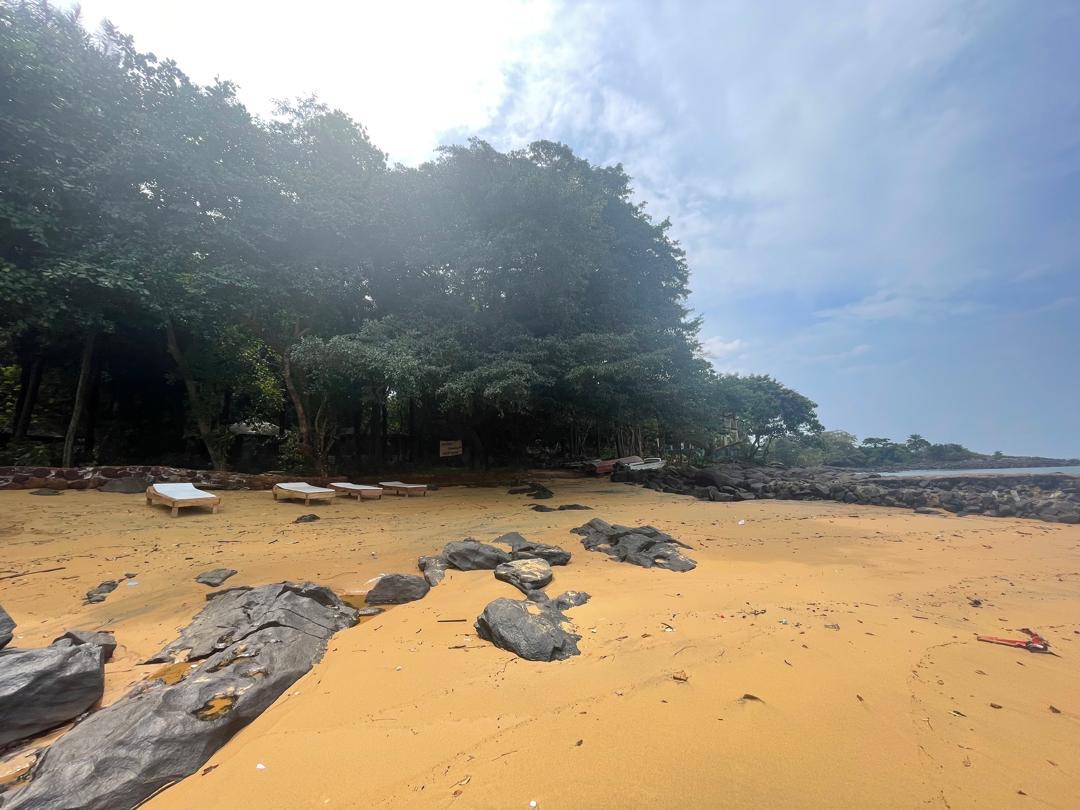
Dublin spans 3 km with secondary forests, while Ricketts has a dense canopy and white sandy beaches. The climate on Banana Island experiences a typical monsoon climate, with seasonal rainy and dry seasons. Banana Island is made up of lateritic hard granite and igneous rocks that are rich in iron and magnesium (Sankoh et al., 2020).
Conservation issues
The IPA lacks protected management, conservation measures and laws. Furthermore, there is lack of information regarding the population dynamics of exploited species. For instance, illegal fishing and exporting activities are ongoing. For instance, fishing activities and other overexploitation activities can disrupt reliance of plants on nutrient cycling.
Despite its ecological role and economic importance to small coastal communities, there is little awareness about this resource (Showers, 2015). Additionally, coastal erosion due to rising sea level poses significant threat. Lack of proper tourism development management can result in habitat modifications without protective status.
Ecosystem services
The coastal waters of the Banana Islands Archipelago IPA are rich in marine life and valuable fisheries resources, including dolphins, whales, and sea cucumbers (now squarely centered around the Banana Islands) (Johnny, 2024). The species require a habitat with clean flowing water, and the islands provide such an environment, distant from the polluted terrestrial run offs (Showers, 2015).
Banana Island is also home to various sea birds. The coral reefs and mangroves of this site are spawning grounds for bonga fish.
It is also an important cultural site due to its historic role in the Trans-Atlantic Slave Trade. There are relics on the island associated with the trade (as observed by Prof. Lebbie).
Site assessor(s)
Assessed by:
Fanny Massally, Royal Botanic Gardens, Kew
Date of first assessment: 9th Jan 2026
Reviewed by:Aiah Lebbie, The University of Sierra Leone
IPA criterion A species
| Species | Qualifying sub-criterion | ≥ 1% of global population | ≥ 5% of national population | 1 of 5 best sites nationally | Entire global population | Socio-economically important | Abundance at site |
|---|---|---|---|---|---|---|---|
| Turraeanthus africana (Welw. ex C.DC.) Pellegr. | A(i) |  |
|
|
|
|
Scarce |
| Garcinia kola Heckel | A(i) | |
|
|
|
|
Frequent |
| Milicia regia (A.Chev.) C.C.Berg | A(i) | |
|
|
|
|
Occasional |
| Ixora nigerica | A(i) | |
|
|
|
|
Scarce |
| Sterculia oblonga Mast. | A(i) | |
|
|
|
|
Scarce |
| Zanthoxylum atchoum | A(i) | |
|
|
|
|
Scarce |
| Afzelia africana Sm. ex Pers. | A(i) | |
|
|
|
|
Frequent |
Turraeanthus africana (Welw. ex C.DC.) Pellegr.
Qualifying sub-criterion:
A(i)
≥ 1% of global population:
≥ 5% of national population:
1 of 5 best sites nationally:
Entire global population:
Socio-economically important:
Abundance at site:
Scarce
Garcinia kola Heckel
Qualifying sub-criterion:
A(i)
≥ 1% of global population:
≥ 5% of national population:
1 of 5 best sites nationally:
Entire global population:
Socio-economically important:
Abundance at site:
Frequent
Milicia regia (A.Chev.) C.C.Berg
Qualifying sub-criterion:
A(i)
≥ 1% of global population:
≥ 5% of national population:
1 of 5 best sites nationally:
Entire global population:
Socio-economically important:
Abundance at site:
Occasional
Ixora nigerica
Qualifying sub-criterion:
A(i)
≥ 1% of global population:
≥ 5% of national population:
1 of 5 best sites nationally:
Entire global population:
Socio-economically important:
Abundance at site:
Scarce
Sterculia oblonga Mast.
Qualifying sub-criterion:
A(i)
≥ 1% of global population:
≥ 5% of national population:
1 of 5 best sites nationally:
Entire global population:
Socio-economically important:
Abundance at site:
Scarce
Zanthoxylum atchoum
Qualifying sub-criterion:
A(i)
≥ 1% of global population:
≥ 5% of national population:
1 of 5 best sites nationally:
Entire global population:
Socio-economically important:
Abundance at site:
Scarce
Afzelia africana Sm. ex Pers.
Qualifying sub-criterion:
A(i)
≥ 1% of global population:
≥ 5% of national population:
1 of 5 best sites nationally:
Entire global population:
Socio-economically important:
Abundance at site:
Frequent
IPA criterion C qualifying habitats
| Habitat | Qualifying sub-criterion | ≥ 5% of national resource | ≥ 10% of national resource | 1 of 5 best sites nationally | Areal coverage at site |
|---|---|---|---|---|---|
| Low-altitude evergreen forest and gallery forest | C(i) |  |
|
|
Low-altitude evergreen forest and gallery forest
Qualifying sub-criterion:
C(i)
≥ 5% of national resource:
≥ 10% of national resource:
Areal coverage at site:
General site habitats
| General site habitat | Percent coverage | Importance |
|---|---|---|
| Forest - Subtropical/Tropical Moist Lowland Forest | |
Major |
| Wetlands (inland) - Seasonal/Intermittent/Irregular Rivers, Streams, Creeks | |
Minor |
| Marine Intertidal - Sandy Shoreline and/or Beaches, Sand Bars, Spits, etc. | |
Major |
| Marine Intertidal - Rocky Shoreline | |
Major |
| Marine Intertidal - Mangrove Submerged Roots | |
Major |
Forest - Subtropical/Tropical Moist Lowland Forest
Percent coverage:
Importance:
Major
Wetlands (inland) - Seasonal/Intermittent/Irregular Rivers, Streams, Creeks
Percent coverage:
Importance:
Minor
Marine Intertidal - Sandy Shoreline and/or Beaches, Sand Bars, Spits, etc.
Percent coverage:
Importance:
Major
Marine Intertidal - Rocky Shoreline
Percent coverage:
Importance:
Major
Marine Intertidal - Mangrove Submerged Roots
Percent coverage:
Importance:
Major
Land use types
| Land use type | Percent coverage | Importance |
|---|---|---|
| Agriculture (arable) | |
Minor |
| Tourism / Recreation | |
Major |
| Harvesting of wild resources | |
Major |
| Agriculture (aquatic) | |
Major |
| Residential / urban development | |
Major |
Agriculture (arable)
Percent coverage:
Importance:
Minor
Tourism / Recreation
Percent coverage:
Importance:
Major
Harvesting of wild resources
Percent coverage:
Importance:
Major
Agriculture (aquatic)
Percent coverage:
Importance:
Major
Residential / urban development
Percent coverage:
Importance:
Major
Threats
| Threat | Severity | Timing |
|---|---|---|
| Residential & commercial development - Tourism & recreation areas | Ongoing - stable | |
| Residential & commercial development - Housing & urban areas | Ongoing - stable | |
| Agriculture & aquaculture - Annual & perennial non-timber crops | Ongoing - stable | |
| Agriculture & aquaculture - Marine & freshwater aquaculture - Subsistence/artisinal aquaculture | Ongoing - increasing | |
| Agriculture & aquaculture - Livestock farming & ranching - Scale Unknown/Unrecorded | Ongoing - stable | |
| Invasive & other problematic species, genes & diseases - Problematic native species/diseases - Named species | Ongoing - increasing | |
| Climate change & severe weather - Habitat shifting & alteration | Ongoing - increasing |
Residential & commercial development - Tourism & recreation areas
Severity:
Timing:
Ongoing - stable
Residential & commercial development - Housing & urban areas
Severity:
Timing:
Ongoing - stable
Agriculture & aquaculture - Annual & perennial non-timber crops
Severity:
Timing:
Ongoing - stable
Agriculture & aquaculture - Marine & freshwater aquaculture - Subsistence/artisinal aquaculture
Severity:
Timing:
Ongoing - increasing
Agriculture & aquaculture - Livestock farming & ranching - Scale Unknown/Unrecorded
Severity:
Timing:
Ongoing - stable
Invasive & other problematic species, genes & diseases - Problematic native species/diseases - Named species
Severity:
Timing:
Ongoing - increasing
Climate change & severe weather - Habitat shifting & alteration
Severity:
Timing:
Ongoing - increasing
Management type
| Management type | Description | Year started | Year finished |
|---|---|---|---|
| No management plan in place | |
|
No management plan in place
Year started:
Year finished:
Bibliography
THE COMPENDIUM OF RARE AND THREATENED FOREST FLORA IN SIERRA LEONE
ENVIRONMENTAL PROTECTION AGENCY-SIERRA LEONE Available online
Ecology, Fishries and trade of the holothuria Resources of Sierra Leone (Sea Cucumbers ) Report.
EPA
Banana, Bonthe, Bunce Islands and Sierra Leone’s Other Islands – Their History and Inter-Relatedness during the Trans-Atlantic Slave Trade.
The Journal of Sierra Leone Studies


Recommended citation
Fanny Massally (2026) Tropical Important Plant Areas Explorer: Banana Island Archipelagos (Sierra Leone). https://tipas.kew.org/site/banana-island-archipelagos/ (Accessed on 26/08/2026)