
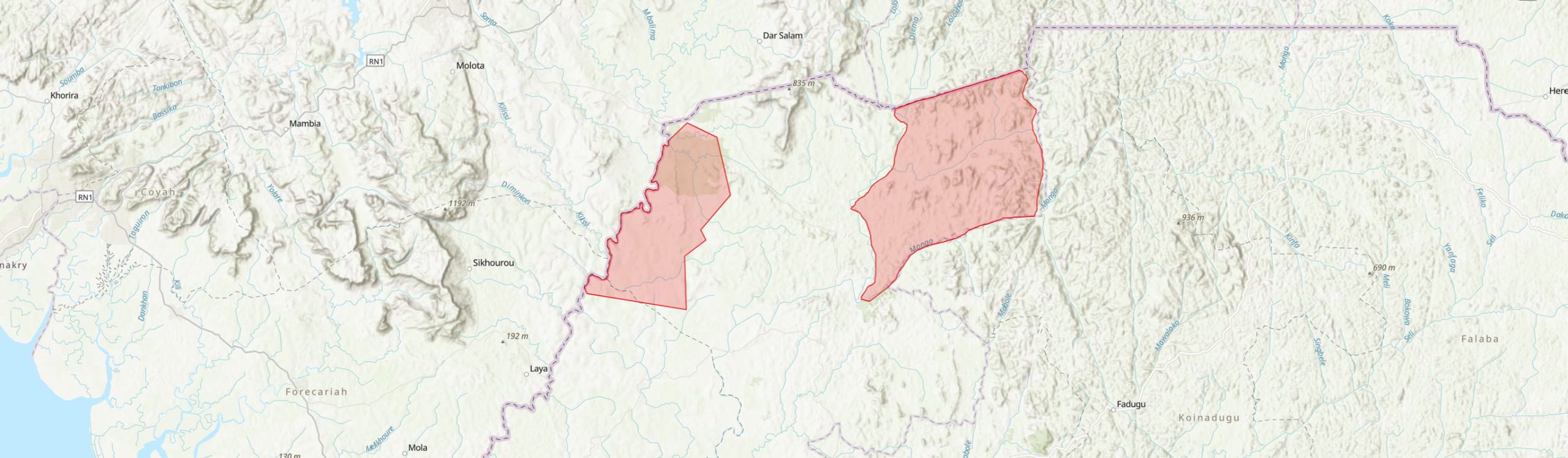
Country: Sierra Leone
Administrative region: Northern (Province)
Central co-ordinates: 9.75000 N, 12.15 W
Area: 1147.7km²
Qualifying IPA Criteria
A(i)Site contains one or more globally threatened species, C(iii)Site contains nationally threatened or restricted habitat or vegetation types, AND/OR habitats that have severely declined in extent nationally
IPA assessment rationale
The Outamba-Kilimi National Park IPA site has diverse habitats with six globally threatened species triggering criterion A(i) and is the best site nationally for threatened Pterocarpus erinaceus. The site is also the only extensive area of savanna woodlands (>10% ) and grassland savanna with protection in Sierra Leone supporting a high primate population in Sierra Leone and therefore triggers criterion C(iii).
Site description
The Outamba-Kilimi National Park important plant area (IPA) is in north-western Sierra Leone along the border with Guinea and covers approximately 1148 Km2. The site lies within the Sudan–Guinea Savanna biome and it’s characterized by a heterogeneous landscape of mostly savanna with isolated patches of forest, including gallery forests and dry semi-deciduous forests formations (KBA, 2026). The Outamba-Kilimi National Park is situated within the Tambakha Chiefdom, Karene District.
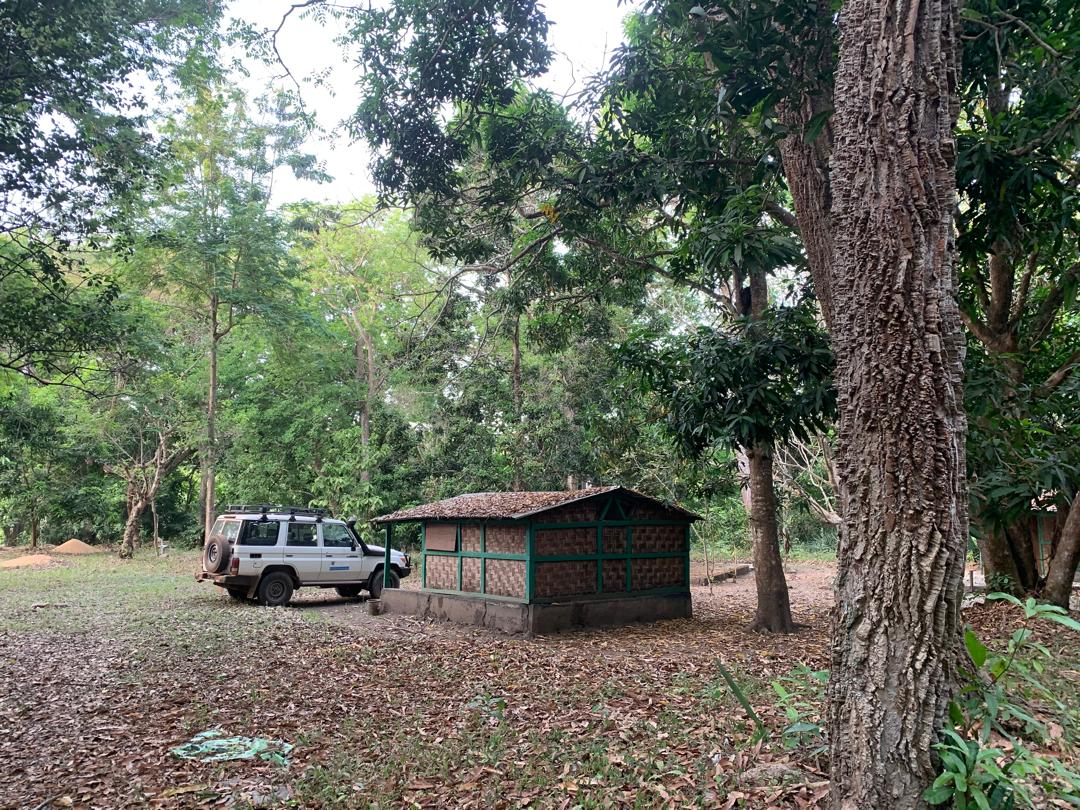
The Outamba-Kilimi National Park is the largest of three protected areas within Sierra Leone's savanna ecosystem and is administratively split into two areas, Outamba (74,100 ha) and Kilimi (36,800 ha). These areas are separated by an unprotected corridor of about 25 km long by 40 km wide, which fragments the IPA and is critical for proper conservation management. Several settlements are found within and outside the park. The site was initially designated as a game reserve in 1974 and was formerly declared a national park in 1995. The IPA site is recognized as a significant bio hotspot and a critical conservation landmark in Sierra Leone.
Botanical significance
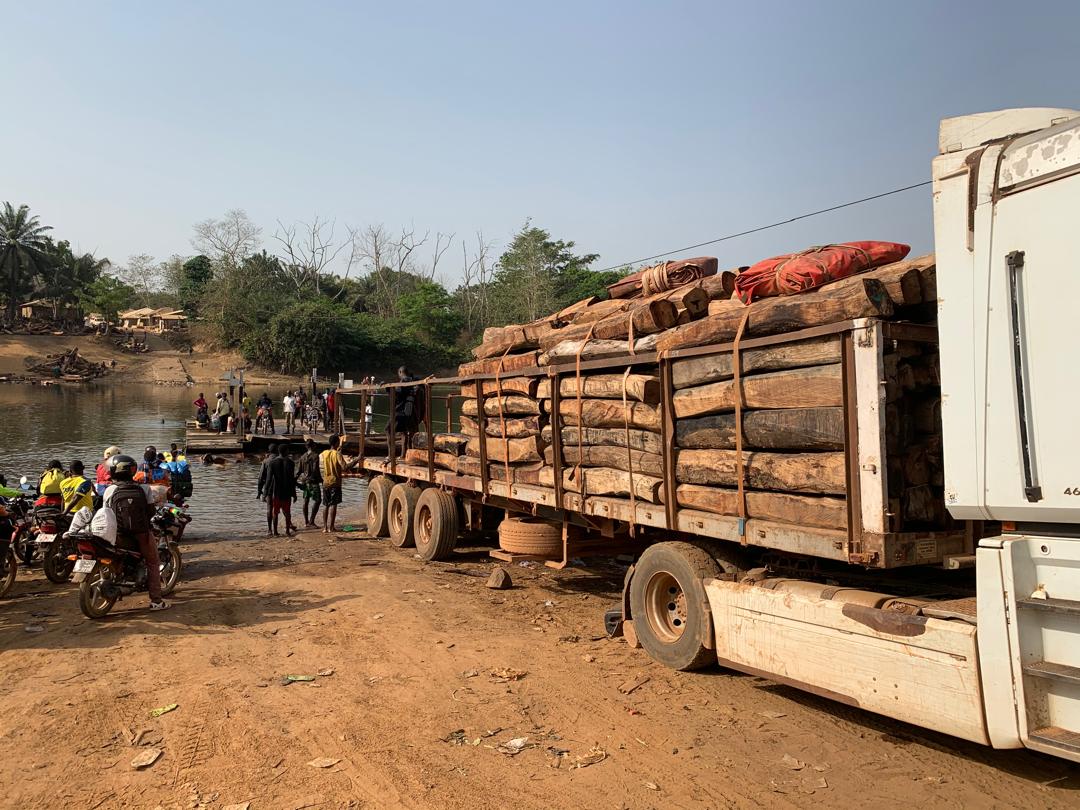
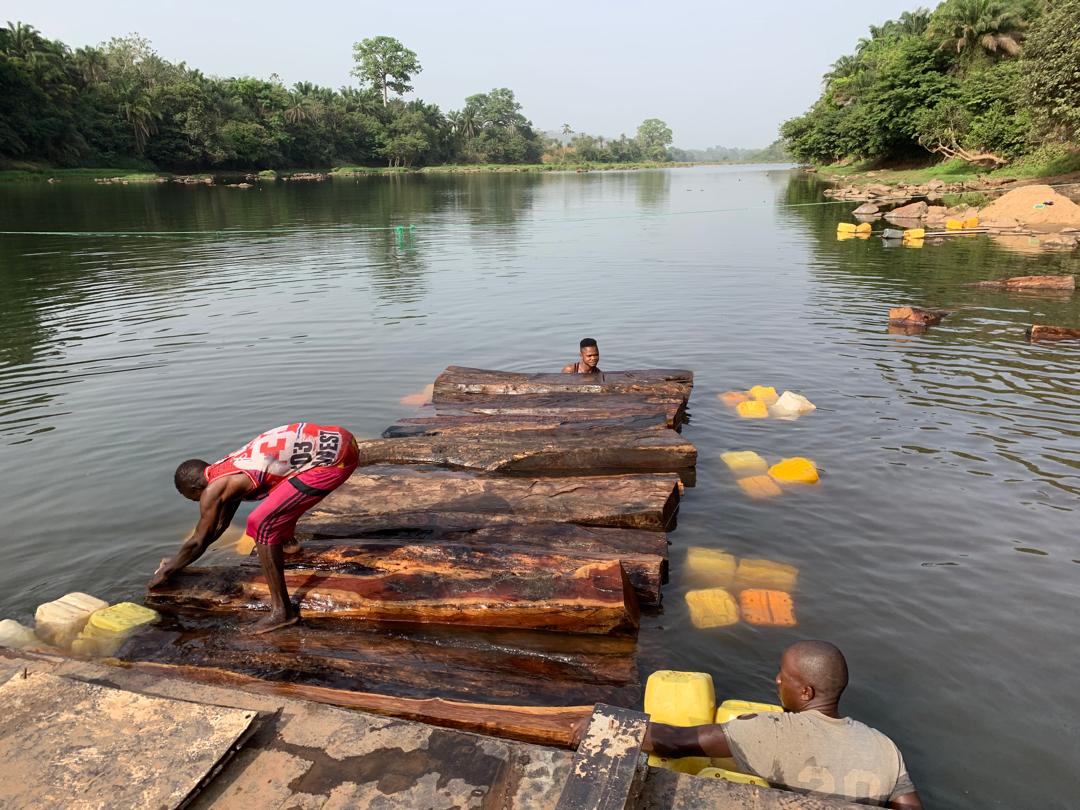
The Outamba-Kilimi National Park IPA is of high botanical significance as it represents the largest protected savanna ecosystem in Sierra Leone. It is part of the Sudan-Guinean zone. The site supports diverse savanna flora mixed with forest patches. The IPA has several threatened plant species. Particularly, the endangered tree Pterocarpus erinaceus (African Rosewood), one of the most threatened timber species in West Africa, occurs within the IPA in significant populations and is a key element for conservation focus for this site (Fayiah et al., 2024).
Recent botanical surveys suggest that Outamba-Kilimi National Park supports a few vascular plants of conservation interest, although existing studies have documented only a subset of commonly occurring taxa, denoting limited sampling effort and flora research across the IPA (Febrianti et al., 2023; Tsvetkova et al., 2023; Fayiah et al., 2024). This under-representation highlights the need for more comprehensive research to document the flora diversity, as there is a likelihood of additional undocumented threatened species.
In addition to Pterocarpus erinaceus, several species of conservation concern have been recorded within the IPA, including eight Vulnerable species such as Milicia regia, Garcina afzelii, Nesogordonia papaverifera, Khaya senegalensis, and Dilophotriche occidentalis, and Near Threatened species such as Albizia ferruginea and Milicia excelsa. These species occurrences highlight the relevance of this site under the IPA criteria.
Habitat and geology
The vegetation of the Outamba-Kilimi National Park IPA is a mosaic of grasslands, closed and open savanna woodland, secondary forests, farm bush, and gallery forest (Fayiah et al., 2024). Additional habitats include seasonally flooded grasslands, areas of Raphia palm swamps, and riverine grasslands. Notable ecological differences occur between the two area components of the IPA: Outamba primarily supports tall-grass savanna and moist woodland with small areas of closed-canopy forest, whereas Killimi supports more open savanna woodland with shorter grasses.
The site experiences a tropical humid climate, with mean annual rainfall reaching about 3,000 mm in the northern parts of the park (Norman et al., 2022). Changes in hydrology and soil conditions significantly influence habitat distribution, resulting in moist savanna in seasonally wet areas, tree savanna in dry areas, and shrub-grass savanna on hilly terrain.
The dominant vegetation type is moist savanna woodland, that contains fire-resistant trees with gnarled bark and flat-topped canopies that can be open or closed. Daniellia oliveri, Lophira lanceolata, Borassus aethiopum, Pterocarpus erinaceus, Parkia biglobosa, Cassia sieberiana, Terminalia albida, and Crossopteryx febrifuga are the most dominant woody species (Martin 1938). Grass species include Chasmopodium caudatum, Hyparrhenia rufa, Andropogon tectorum, Andropogon gabonensis, and Pennisetum purpureum. Grasses can grow up to seven meters high (Cole 1968). A significant portion of the savanna area is seasonally converted annually for small-scale cultivation of rice, millet, maize, cassava, and peppers (Fayiah et al., 2024).
Conservation issues
TThe Outamba-Kilimi National Park IPA was designated a National Park in 1995. It is under the purview of the National Protected Area Authority (NPAA) and has been assessed under category ii by IUCN but continues to face significant pressures. Illegal logging at high rate, particularly targeting Pterocarpus erinaceus, remains a concern and results in large scale habitat destruction within the park (Fayiah et al., 2024; F. Massally, pers.obs., 2021). Other threats include illegal settlements within the park, cattle rearing slash and burn agricultural practices, charcoal production, wildlife hunting, and artisanal mining (Fayiah et al.,2024). The park's management is strained by significant logistical constraints, declining surveillance capacity and weak law enforcement (KBA, 2026).
Wildfires form a major recurring threat across the IPA, driven largely by subsistence farming practices and nomadic herding activities, where deliberate burning is used to stimulate grass regrowth for livestock. These fires, in combination with seasonal land conversion and mining extractions pose significant threats to the conservation of this IPA (Fayiah et al 2024, Munro, 2020). The periodic occurrence of bush fires is largely from subsistence farming and nomadic herding activities where herders are frequently setting fires to the grass to promote regrowth for their animals. According to WFP in 2025, Outamba has a significant amount of fire occurrences with high prevalence within the boundaries. A total of approximately 1447 ha of forest cover is currently lost or degraded in addition to the approximately 3,483 ha lost since 2020. Outamba- Killimi has about 4768 fire hotspots between May 2024 to April 2025 according to WFP (2025). Collaborative management is urgently needed for the protection of this IPA.
Ecosystem services
The Outamba-Kilimi National Park IPA provides a range of ecosystem services that are important both national and local, through its diverse habitats and river systems. The savanna grasslands create ideal conditions for the rearing and herding of cattle, which supports regional livelihoods, as most of Sierra Leone's beef products are sourced from this savanna belt. However, the practice of cattle herders to set fire to the vegetation, to promote the growth of new grass, threatens rare plant species and favours common species and introduced weeds. Within the IPA, the harvesting of fuel wood and timber put pressure on certain species and indicates an unsustainable use of ecosystem services. The IPA holds cultural and economic potential through ecotourism, marked by its fauna diversity (Fayiah et al., 2024). The site supports at least nine species of primates including Western Chimpanzee, red colobus, black and white colobus, sooty mangabey, and olive baboons; and a total number of 220 bird species recorded in the park.
Site assessor(s)
Assessed by:
Fanny Massally, Royal Botanic Gardens, Kew
Date of first assessment: 9th Jan 2026
Reviewed by:Aiah Lebbie, The University of Sierra Leone
IPA criterion A species
| Species | Qualifying sub-criterion | ≥ 1% of global population | ≥ 5% of national population | 1 of 5 best sites nationally | Entire global population | Socio-economically important | Abundance at site |
|---|---|---|---|---|---|---|---|
| Pterocarpus erinaceus Poir. | A(i) |  |
|
|
 |
|
Abundant |
| Milicia regia (A.Chev.) C.C.Berg | A(i) | |
|
|
|
|
Scarce |
| Garcinia afzelii Engl. | A(i) | |
|
|
|
|
Scarce |
| Nesogordonia papaverifera (A.Chev.) Capuron ex N.Hallé | A(i) | |
|
|
|
|
Scarce |
| Khaya senegalensis A.Juss. | A(i) | |
|
|
|
|
Common |
| Dilophotriche occidentalis Jacq.-Fél. | A(i) | |
|
|
|
|
Pterocarpus erinaceus Poir.
Qualifying sub-criterion:
A(i)
≥ 1% of global population:
≥ 5% of national population:
1 of 5 best sites nationally:
Entire global population:
Socio-economically important:
Abundance at site:
Abundant
Milicia regia (A.Chev.) C.C.Berg
Qualifying sub-criterion:
A(i)
≥ 1% of global population:
≥ 5% of national population:
1 of 5 best sites nationally:
Entire global population:
Socio-economically important:
Abundance at site:
Scarce
Garcinia afzelii Engl.
Qualifying sub-criterion:
A(i)
≥ 1% of global population:
≥ 5% of national population:
1 of 5 best sites nationally:
Entire global population:
Socio-economically important:
Abundance at site:
Scarce
Nesogordonia papaverifera (A.Chev.) Capuron ex N.Hallé
Qualifying sub-criterion:
A(i)
≥ 1% of global population:
≥ 5% of national population:
1 of 5 best sites nationally:
Entire global population:
Socio-economically important:
Abundance at site:
Scarce
Khaya senegalensis A.Juss.
Qualifying sub-criterion:
A(i)
≥ 1% of global population:
≥ 5% of national population:
1 of 5 best sites nationally:
Entire global population:
Socio-economically important:
Abundance at site:
Common
Dilophotriche occidentalis Jacq.-Fél.
Qualifying sub-criterion:
A(i)
≥ 1% of global population:
≥ 5% of national population:
1 of 5 best sites nationally:
Entire global population:
Socio-economically important:
Abundance at site:
General site habitats
| General site habitat | Percent coverage | Importance |
|---|---|---|
| Savanna - Dry Savanna | |
Major |
| Grassland - Subtropical/Tropical Dry Lowland Grassland | |
Major |
| Forest - Subtropical/Tropical Moist Lowland Forest | |
Major |
| Forest - Subtropical/Tropical Moist Lowland Forest | |
Major |
Savanna - Dry Savanna
Percent coverage:
Importance:
Major
Grassland - Subtropical/Tropical Dry Lowland Grassland
Percent coverage:
Importance:
Major
Forest - Subtropical/Tropical Moist Lowland Forest
Percent coverage:
Importance:
Major
Forest - Subtropical/Tropical Moist Lowland Forest
Percent coverage:
Importance:
Major
Land use types
| Land use type | Percent coverage | Importance |
|---|---|---|
| Agriculture (aquatic) | |
Unknown |
| Tourism / Recreation | |
Unknown |
| Agriculture (arable) | |
Unknown |
| Nature conservation | 56 | Major |
Agriculture (aquatic)
Percent coverage:
Importance:
Unknown
Tourism / Recreation
Percent coverage:
Importance:
Unknown
Agriculture (arable)
Percent coverage:
Importance:
Unknown
Nature conservation
Percent coverage:
56
Importance:
Major
Threats
| Threat | Severity | Timing |
|---|---|---|
| Agriculture & aquaculture - Annual & perennial non-timber crops - Small-holder farming | Medium | Ongoing - stable |
| Natural system modifications - Fire & fire suppression - Increase in fire frequency/intensity | Medium | Ongoing - increasing |
| Biological resource use - Logging & wood harvesting - Unintentional effects: subsistence/small scale (species being assessed is not the target) [harvest] | Medium | Ongoing - stable |
| Biological resource use - Gathering terrestrial plants - Intentional use (species being assessed is the target) | Medium | Ongoing - increasing |
Agriculture & aquaculture - Annual & perennial non-timber crops - Small-holder farming
Severity:
Medium
Timing:
Ongoing - stable
Natural system modifications - Fire & fire suppression - Increase in fire frequency/intensity
Severity:
Medium
Timing:
Ongoing - increasing
Biological resource use - Logging & wood harvesting - Unintentional effects: subsistence/small scale (species being assessed is not the target) [harvest]
Severity:
Medium
Timing:
Ongoing - stable
Biological resource use - Gathering terrestrial plants - Intentional use (species being assessed is the target)
Severity:
Medium
Timing:
Ongoing - increasing
Protected areas
| Protected area name | Protected area type | Relationship with IPA | Areal overlap |
|---|---|---|---|
| Outamba-Killimi National Park | National Park | protected/conservation area matches IPA | |
Outamba-Killimi National Park
Protected area type:
National Park
Relationship with IPA:
protected/conservation area matches IPA
Areal overlap:
Conservation designation
| Designation name | Protected area | Relationship with IPA | Areal overlap |
|---|---|---|---|
| Outamba-Kilimi National Park | Key Biodiversity Area | protected/conservation area encompasses IPA | 1349 |
Outamba-Kilimi National Park
Protected area:
Key Biodiversity Area
Relationship with IPA:
protected/conservation area encompasses IPA
Areal overlap:
1349
Management type
| Management type | Description | Year started | Year finished |
|---|---|---|---|
| Protected Area management plan in place | |
|
Protected Area management plan in place
Year started:
Year finished:
Bibliography
Targeted actions to enhance habitat regeneration, conservation, and biodiversity in the Outamba-Kilimi-Madina-Oula transboundary landscape of Guinea and Sierra Leone - Camera trap and transect survey 2023- 2024 Summary Report
Archiving Outamba Kilimi National Park Wildlife Biodiversity in Different Local Languages of Sierra Leone
World Journal of Environmental Biosciences, Vol Volume 13, Issue 4:, page(s) 18-28 Available online
Endocannabinoid system components: A crucial role in regulation of disease.
Journal of Advanced Pharmacy Education and Research, Vol 12(3), page(s) 72-81
Determination of radical scavenging activity of Creatine lysinate against methanol solutions of ABTS.
Journal of Advanced Pharmacy Education & Research, Vol 13(2), page(s) 151-155
Influence of interdental hygiene products on periodontal pathogens according to indicators of hygienic indices
Journal of Advanced Pharmacy Education and Research, Vol 12(3), page(s) 93- 98
BIODIVERSITY ASSESSMENT AND IDENTIFICATION OF PRIORITIES FOR BIODIVERSITY CONSERVATION IN SIERRA LEONE
Report prepared for Biodiversity Strategy Action Program (BSAP)
A preliminary survey of the vegetation of Sierra Leone. Government Printer
Freetown, page(s) 6p
Amphibians and reptiles of the Outamba-Kilimi region, Sierra Leone
Journal of Herpetological Association of Africa, Vol 33, page(s) 1-4
Sierra Leone’s Second National Biodiversity Strategy and Action Plan 2017-2026
Environment Protection Agency Sierra Leone
Key Biodiversity Areas Partnership (2026) Key Biodiversity Areas factsheet: Outamba-Kilimi National Park. Extracted from the World Database of Key Biodiversity Areas. Developed by the Key Biodiversity Areas Partnership
: BirdLife International, IUCN, American Bird Conservancy, Amphibian Survival Alliance, Conservation International, Critical Ecosystem Partnership Fund, Global Environment Facility, Re:wild, NatureServe, Rainforest Trust, Royal Society for the Protection
CHAPTER 5 Wildlife Conservation. In Colonial Seeds in African Soil: A Critical History of Forest
Conservation in Sierra Leone, page(s) pp. 125-161


Recommended citation
Fanny Massally (2026) Tropical Important Plant Areas Explorer: Outamba Kilimi National Park (Sierra Leone). https://tipas.kew.org/site/outamba-kilimi-national-park/ (Accessed on 26/08/2026)