
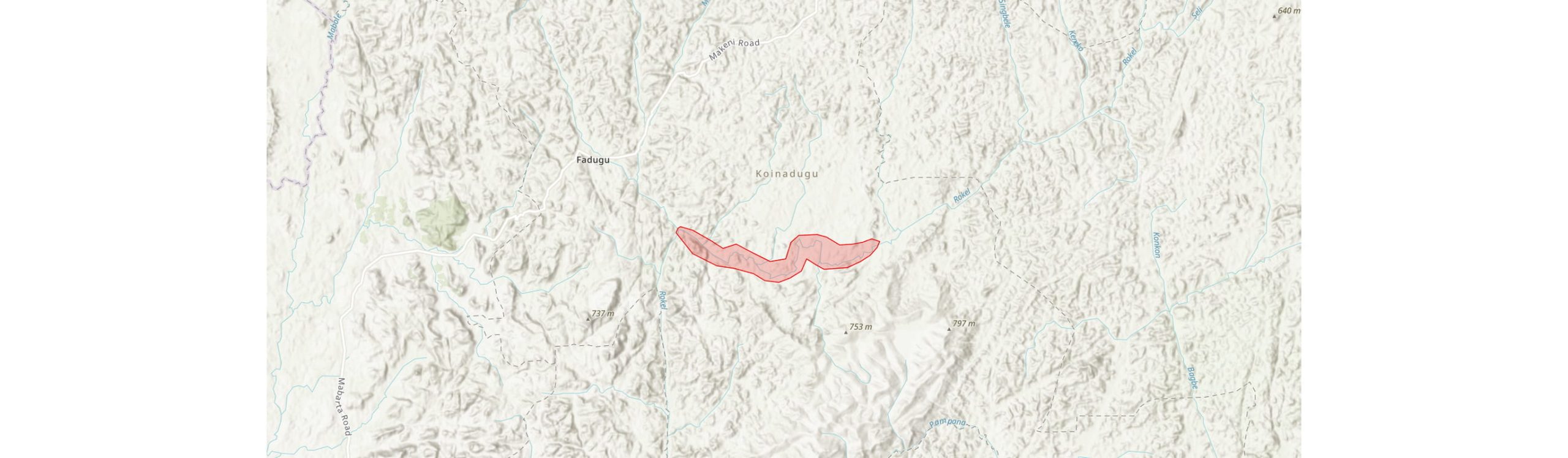
Country: Sierra Leone
Administrative region: Northern (Province)
Central co-ordinates: 9.32000 N, 11.58 W
Area: 34.6km²
Qualifying IPA Criteria
A(i)Site contains one or more globally threatened species, A(iv)Site contains one or more range restricted endemic species that are potentially threatened, B(ii)Site contains an exceptional number of species of high conservation importance, C(iii)Site contains nationally threatened or restricted habitat or vegetation types, AND/OR habitats that have severely declined in extent nationally
IPA assessment rationale
The Upper-Seli-Rokel River IPA rapids are rich in Podostemaceae species and contain the only existing site globally for Ledermanniella yiben (CR), which would be permanently submerged with the construction of the proposed Yiben hydroelectric reservoir, triggering criterion A(iv). In addition, this IPA also meets criterion A (i) due to the presence of 26 globally threatened plant taxa in Sierra Leone. This site contains a >3% of species of high conservation importance, thus triggering criterion B(ii). It’s also triggering criterion C(iii) due to the nationally threatened freshwater waterfalls that supports endemic Podostemaceae species, for which Sierra Leone is the hotspot for such endemism.
Site description
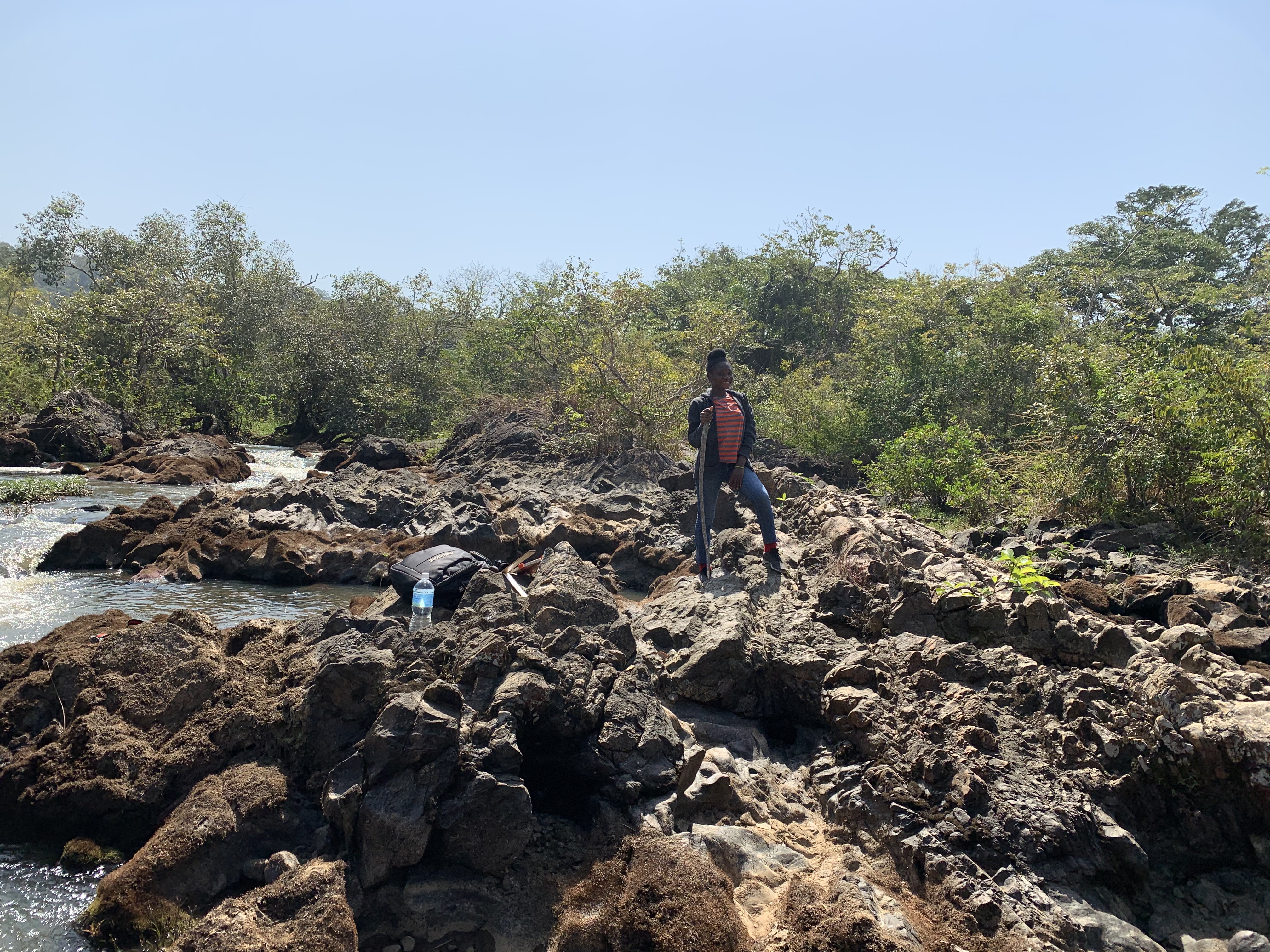
The Upper-Seli Rokel River IPA is situated along the Rokel-Seli River in the Northern Province of Sierra Leone. It is the largest river in Sierra Leone. The IPA is upstream of the large dam near Bumbuna, and upstream of the reservoir of this dam. The IPA is located a few km north of the northernmost hills of the Sula Mountains, and north of Lake Sonfon, between the villages Yiben and Bandala. The town of Fadugu is located about 12 km northwest of the IPA. The Upper Rokel-Seli River IPA is characterized by low hills with farmland, fallow land, secondary forest patches, with gallery forest along the river, as well as river rapids. The plant species composition of the gallery forest vegetation along muddy sections of the river, is different from rocky sections of the river. A dam and reservoir are planned to be constructed, which would flood most of the IPA.
Botanical significance
The rapids in the Upper Seli-Rokel River IPA are rich in Podostemaceae species, which are freshwater aquatic plants occurring on rocky bedrock usually with fast-flowing water. The IPA is the only known site for Ledermanniella yiben and also the best site for Ledermanniella aloides in Sierra Leone.
The gallery and forest patches supports several globally threatened species, such as critically endangered Vepris laurifolia, endangered species including Cola angustifolia, Eremospatha dransfieldii, Gilbertiodendron tonkolili, Stylochaeton pilosum, Tessmannia baikiaeoides, and Placodiscus pseudostipularis. Vulnerable species in this area include Copaifera salikounda, Cryptosepalum tetraphyllum, Milicia regia, Guibourtia leonensis, Afzelia africana, Landolphia macrantha, Aulacocalyx divergens, Anopyxis klaineana, Strychnos melastomatoides, Khaya grandifoliola, Anubias gracilis, Brachystegia leonensis, Homalium smythei, Garcinia kola, Neolemonniera clitandrifolia, and Dialium pobeguinii.
In addition, this site also contains several near-threatened plant taxa, including Albizia ferruginea, Mitragyna stipulosa, Nauclea diderrichii, Trichoscypha longifolia, Gilbertiodendron limba, Irvingia gabonensis, and Karima scarciesii. Two new taxa records, Psychotria abouabouensis and Ancistrorhynchus akeassiae, both native to West Africa, where made from this IPA for the first time in Sierra Leone.
Habitat and geology
The Upper-Seli-Rokel River IPA is located in the |Seli-Rokel River watershed. The IPA consists of mosaic vegetation types. A gallery forest of typically 50-meter-wide strips along rivers and streams is found within this IPA. It also consists of scattered closed-canopy rainforests with trees up to 25 m high, which is an important habitat for many priority biodiversity species. Savannas generally thrive on well-drained soil, along with grasslands with tall elephant grass in this IPA.
Due to the IPA's topography, most of the grasslands and swamp areas are converted into peanuts and rice fields. The river channel exhibits a moderately steep structure, characterised by cobble-bed or a mixed bedrock-cobble-bed channel with plain-bed, pool-riffle or pool-rapid reach types that are of similar length.
The average annual rainfall in the area is between 1750 and 3000 mm. The temperature in this region is between 18°C and 38°C (Ministry of Water Resources, 2015; Hijmans et al., 2012; Wilson et al., 2018). The IPA's climate is tropical monsoon climate of typical wet and dry seasons (Wilson et al., 2018).
Conservation issues
This IPA is currently the only known site for Ledermanniella yiben, occurring in a part of a single river rapid, covering approximately 250 m². This species is critically endangered and will be permanently flooded by the Yiben reservoir (Cheek et al., 2017; Tatum-Hume et al., 2019). Despite several attempts by the Yiben dam project to implement mitigation measures such as translocation and additional searches for natural natural populations, these efforts have proven ineffective.
No other populations of this plant occurring elsewhere, and the only successful translocation site is located upstream along the same river (Lebbie, 2018; Tatum-Hume et al., 2019). This River Rokel river basin, where this IPA is located, serves as a hotspot for fish diversity and endemism, with about 72 freshwater fish, of which 17 are endemic to this river (Kanu et al., 2022; Payne, 2018; Paugy et al., 2003).
Currently, this IPA lacks formal management, despites formerly designated as the country's only RAMZAR site. Consequently, it faces several threats, including deforestation, urbanisation, and infrastructural development (such as dams). Additionally, socioeconomic activities such as farming, cattle rearing (mostly nomadic herding), artisanal gold and industrial iron ore mining, sand quarrying, biofuel production, and fishing further add to these threats (Mansaray and Barrie, 2016; Wilson et al., 2018; Kanu et al., 2022).
Ecosystem services
The Rokel-Seli river basin is an important socioeconomic resource in Sierra Leone. It primarily supplies water for the Bumbuna hydroelectric power scheme, as well as water for agriculture, fisheries, mining, and transportation and for ecological purposes (Thorlu et al., 2021). The basin has a catchment area of 10,250 km². This IPA provides important habitats for endemic fishes, while the forest patches are home to several other animals in Sierra Leone. The gallery forests within this IPA serve as a source for timber and wood fuel used by the local communities.
Site assessor(s)
Assessed by:
Fanny Massally, Royal Botanic Gardens, Kew
Date of first assessment: 27th Feb 2026
Reviewed by:Xander van der Burgt, The Royal Botanic Gardens Kew
IPA criterion A species
| Species | Qualifying sub-criterion | ≥ 1% of global population | ≥ 5% of national population | 1 of 5 best sites nationally | Entire global population | Socio-economically important | Abundance at site |
|---|---|---|---|---|---|---|---|
| Ledermanniella yiben | A(i), A(iv) |  |
|
|
|
 |
Scarce |
| Ledermanniella aloides (Engl.) C.Cusset | A(i) | |
|
|
|
|
Frequent |
| Tessmannia baikiaeoides | A(i) | |
|
|
|
|
Frequent |
| Copaifera salikounda Heckel | A(i) | |
|
|
|
|
Abundant |
| Cryptosepalum tetraphyllum (Hook.f.) Benth. | A(i) | |
|
|
|
|
Occasional |
| Milicia regia (A.Chev.) C.C.Berg | A(i) | |
|
|
|
|
Frequent |
| Guibourtia leonensis J. L�onard | A(i) | |
|
|
|
|
Common |
| Eremospatha dransfieldii Sunderl. | A(i) | |
|
|
|
|
Common |
| Vepris laurifolia | A(i) | |
|
|
|
|
Scarce |
| Afzelia africana Sm. ex Pers. | A(i) | |
|
|
|
|
Common |
| Landolphia macrantha (K.Schum.) Pichon | A(i) | |
|
|
|
|
Common |
| Anopyxis klaineana (Pierre) Engl. | A(i) | |
|
|
|
|
Occasional |
| Cola angustifolia K.Schum. | A(i) | |
|
|
|
|
Occasional |
| Stylochaeton pilosum Bogner | A(i) | |
|
|
|
|
Scarce |
| Strychnos melastomatoides Gilg. | A(i) | |
|
|
|
|
Scarce |
| Khaya grandifoliola C.DC. | A(i) | |
|
|
|
|
Occasional |
| Placodiscus pseudostipularis Radlk. | A(i) | |
|
|
|
|
Scarce |
| Anubias gracilis A.Chev. ex Hutch. | A(i) | |
|
|
|
|
Occasional |
| Brachystegia leonensis Hutch. & Burtt Davy | A(i) | |
|
|
|
|
Scarce |
| Gilbertiodendron tonkolili Burgt & Estrella | A(i) | |
|
|
|
|
Occasional |
| Homalium smythei Hutch. & Dalziel | A(i) | |
|
|
|
|
Occasional |
| Garcinia kola Heckel | A(i) | |
|
|
|
|
Scarce |
| Neolemonniera clitandrifolia A.Chev. | A(i) | |
|
|
|
|
Occasional |
| Dialium pobeguinii Pellegr. | A(i) | |
|
|
|
|
Scarce |
| Aulacocalyx divergens (Hutch. & Dalziel) Keay | A(i) | |
|
|
|
|
Scarce |
Ledermanniella yiben
Qualifying sub-criterion:
A(i), A(iv)
≥ 1% of global population:
≥ 5% of national population:
1 of 5 best sites nationally:
Entire global population:
Socio-economically important:
Abundance at site:
Scarce
Ledermanniella aloides (Engl.) C.Cusset
Qualifying sub-criterion:
A(i)
≥ 1% of global population:
≥ 5% of national population:
1 of 5 best sites nationally:
Entire global population:
Socio-economically important:
Abundance at site:
Frequent
Tessmannia baikiaeoides
Qualifying sub-criterion:
A(i)
≥ 1% of global population:
≥ 5% of national population:
1 of 5 best sites nationally:
Entire global population:
Socio-economically important:
Abundance at site:
Frequent
Copaifera salikounda Heckel
Qualifying sub-criterion:
A(i)
≥ 1% of global population:
≥ 5% of national population:
1 of 5 best sites nationally:
Entire global population:
Socio-economically important:
Abundance at site:
Abundant
Cryptosepalum tetraphyllum (Hook.f.) Benth.
Qualifying sub-criterion:
A(i)
≥ 1% of global population:
≥ 5% of national population:
1 of 5 best sites nationally:
Entire global population:
Socio-economically important:
Abundance at site:
Occasional
Milicia regia (A.Chev.) C.C.Berg
Qualifying sub-criterion:
A(i)
≥ 1% of global population:
≥ 5% of national population:
1 of 5 best sites nationally:
Entire global population:
Socio-economically important:
Abundance at site:
Frequent
Guibourtia leonensis J. L�onard
Qualifying sub-criterion:
A(i)
≥ 1% of global population:
≥ 5% of national population:
1 of 5 best sites nationally:
Entire global population:
Socio-economically important:
Abundance at site:
Common
Eremospatha dransfieldii Sunderl.
Qualifying sub-criterion:
A(i)
≥ 1% of global population:
≥ 5% of national population:
1 of 5 best sites nationally:
Entire global population:
Socio-economically important:
Abundance at site:
Common
Vepris laurifolia
Qualifying sub-criterion:
A(i)
≥ 1% of global population:
≥ 5% of national population:
1 of 5 best sites nationally:
Entire global population:
Socio-economically important:
Abundance at site:
Scarce
Afzelia africana Sm. ex Pers.
Qualifying sub-criterion:
A(i)
≥ 1% of global population:
≥ 5% of national population:
1 of 5 best sites nationally:
Entire global population:
Socio-economically important:
Abundance at site:
Common
Landolphia macrantha (K.Schum.) Pichon
Qualifying sub-criterion:
A(i)
≥ 1% of global population:
≥ 5% of national population:
1 of 5 best sites nationally:
Entire global population:
Socio-economically important:
Abundance at site:
Common
Anopyxis klaineana (Pierre) Engl.
Qualifying sub-criterion:
A(i)
≥ 1% of global population:
≥ 5% of national population:
1 of 5 best sites nationally:
Entire global population:
Socio-economically important:
Abundance at site:
Occasional
Cola angustifolia K.Schum.
Qualifying sub-criterion:
A(i)
≥ 1% of global population:
≥ 5% of national population:
1 of 5 best sites nationally:
Entire global population:
Socio-economically important:
Abundance at site:
Occasional
Stylochaeton pilosum Bogner
Qualifying sub-criterion:
A(i)
≥ 1% of global population:
≥ 5% of national population:
1 of 5 best sites nationally:
Entire global population:
Socio-economically important:
Abundance at site:
Scarce
Strychnos melastomatoides Gilg.
Qualifying sub-criterion:
A(i)
≥ 1% of global population:
≥ 5% of national population:
1 of 5 best sites nationally:
Entire global population:
Socio-economically important:
Abundance at site:
Scarce
Khaya grandifoliola C.DC.
Qualifying sub-criterion:
A(i)
≥ 1% of global population:
≥ 5% of national population:
1 of 5 best sites nationally:
Entire global population:
Socio-economically important:
Abundance at site:
Occasional
Placodiscus pseudostipularis Radlk.
Qualifying sub-criterion:
A(i)
≥ 1% of global population:
≥ 5% of national population:
1 of 5 best sites nationally:
Entire global population:
Socio-economically important:
Abundance at site:
Scarce
Anubias gracilis A.Chev. ex Hutch.
Qualifying sub-criterion:
A(i)
≥ 1% of global population:
≥ 5% of national population:
1 of 5 best sites nationally:
Entire global population:
Socio-economically important:
Abundance at site:
Occasional
Brachystegia leonensis Hutch. & Burtt Davy
Qualifying sub-criterion:
A(i)
≥ 1% of global population:
≥ 5% of national population:
1 of 5 best sites nationally:
Entire global population:
Socio-economically important:
Abundance at site:
Scarce
Gilbertiodendron tonkolili Burgt & Estrella
Qualifying sub-criterion:
A(i)
≥ 1% of global population:
≥ 5% of national population:
1 of 5 best sites nationally:
Entire global population:
Socio-economically important:
Abundance at site:
Occasional
Homalium smythei Hutch. & Dalziel
Qualifying sub-criterion:
A(i)
≥ 1% of global population:
≥ 5% of national population:
1 of 5 best sites nationally:
Entire global population:
Socio-economically important:
Abundance at site:
Occasional
Garcinia kola Heckel
Qualifying sub-criterion:
A(i)
≥ 1% of global population:
≥ 5% of national population:
1 of 5 best sites nationally:
Entire global population:
Socio-economically important:
Abundance at site:
Scarce
Neolemonniera clitandrifolia A.Chev.
Qualifying sub-criterion:
A(i)
≥ 1% of global population:
≥ 5% of national population:
1 of 5 best sites nationally:
Entire global population:
Socio-economically important:
Abundance at site:
Occasional
Dialium pobeguinii Pellegr.
Qualifying sub-criterion:
A(i)
≥ 1% of global population:
≥ 5% of national population:
1 of 5 best sites nationally:
Entire global population:
Socio-economically important:
Abundance at site:
Scarce
Aulacocalyx divergens (Hutch. & Dalziel) Keay
Qualifying sub-criterion:
A(i)
≥ 1% of global population:
≥ 5% of national population:
1 of 5 best sites nationally:
Entire global population:
Socio-economically important:
Abundance at site:
Scarce
IPA criterion C qualifying habitats
| Habitat | Qualifying sub-criterion | ≥ 5% of national resource | ≥ 10% of national resource | 1 of 5 best sites nationally | Areal coverage at site |
|---|---|---|---|---|---|
| Waterfalls with endemic Podostemaceae | C(i) | |
|
|
Waterfalls with endemic Podostemaceae
Qualifying sub-criterion:
C(i)
≥ 5% of national resource:
≥ 10% of national resource:
Areal coverage at site:
General site habitats
| General site habitat | Percent coverage | Importance |
|---|---|---|
| Wetlands (inland) - Permanent Rivers, Streams, Creeks [includes waterfalls] | 50 | Major |
| Forest - Subtropical/Tropical Moist Lowland Forest | 20 | Minor |
| Savanna - Moist Savanna | 20 | Minor |
| Grassland - Subtropical/Tropical Dry Lowland Grassland | 10 | Minor |
Wetlands (inland) - Permanent Rivers, Streams, Creeks [includes waterfalls]
Percent coverage:
50
Importance:
Major
Forest - Subtropical/Tropical Moist Lowland Forest
Percent coverage:
20
Importance:
Minor
Savanna - Moist Savanna
Percent coverage:
20
Importance:
Minor
Grassland - Subtropical/Tropical Dry Lowland Grassland
Percent coverage:
10
Importance:
Minor
Land use types
| Land use type | Percent coverage | Importance |
|---|---|---|
| Agriculture (aquatic) | |
Major |
| Extractive industry | |
Major |
| Agriculture (arable) | |
Major |
| Agriculture (pastoral) | |
Unknown |
| Residential / urban development | |
Major |
Agriculture (aquatic)
Percent coverage:
Importance:
Major
Extractive industry
Percent coverage:
Importance:
Major
Agriculture (arable)
Percent coverage:
Importance:
Major
Agriculture (pastoral)
Percent coverage:
Importance:
Unknown
Residential / urban development
Percent coverage:
Importance:
Major
Threats
| Threat | Severity | Timing |
|---|---|---|
| Agriculture & aquaculture - Marine & freshwater aquaculture - Subsistence/artisinal aquaculture | Ongoing - stable | |
| Natural system modifications - Dams & water management/use - Large dams | Ongoing - stable | |
| Energy production & mining - Mining & quarrying | Ongoing - increasing |
Agriculture & aquaculture - Marine & freshwater aquaculture - Subsistence/artisinal aquaculture
Severity:
Timing:
Ongoing - stable
Natural system modifications - Dams & water management/use - Large dams
Severity:
Timing:
Ongoing - stable
Energy production & mining - Mining & quarrying
Severity:
Timing:
Ongoing - increasing
Management type
| Management type | Description | Year started | Year finished |
|---|---|---|---|
| No management plan in place | |
|
No management plan in place
Year started:
Year finished:
Bibliography
The ecology, distribution and diversity of fish species in Sierra Leone rivers and response to human impacts.
Environ. Biol., Vol 01, page(s) 843–864
The Fresh and Brackish Water Fishes of West Africa
Royal Museum for Central Africa, Vol 148, page(s) 148-162
Rainfall Variability Assessment—A Case Study of Rokel-Seli River Basin in Sierra Leone. In: Pandey, A., Mishra, S., Kansal, M., Singh, R., Singh, V. (eds) Climate Impacts on Water Resources in India. Water Science and Technology Library
Springer Cham., Vol 95
Prioritisation of biodiversity for management actions. Report to Joule Africa for the Bumbuna Phase II hydro-electric project. Sierra Leone.
Second Phase Survey and Translocation of the Critical Habitat Requiring Species: Ledermanniella yiben in Selected River Systems of Sierra Leone. Njala University, Sierra Leone.


Recommended citation
Fanny Massally (2026) Tropical Important Plant Areas Explorer: Upper-Seli-Rokel River (Sierra Leone). https://tipas.kew.org/site/upper-seli-rokel-river/ (Accessed on 26/08/2026)