
Country: New Guinea
Administrative region: Papua (Province)
Central co-ordinates: 2.68873 S, 134.57862 E
Qualifying IPA Criteria
A(iii)Site contains one or more highly restricted endemic species that are potentially threatened
IPA assessment rationale
There are 9 plant species endemic to this TIPA, and although none have been Red Listed in threatened categories, their restricted ranges mean that they might become threatened in the future. The lowland forests in this area have numerous species recorded for local uses for food, medicines, timber and building materials. These lowland forests are under the most pressure of all forest types in the region due to their restricted area due to the steep terrain and some transmigration settlements in the north-east of the peninsula. This TIPA includes a diverse range of forest types due to the c.2000 metre range in elevation.
Site description
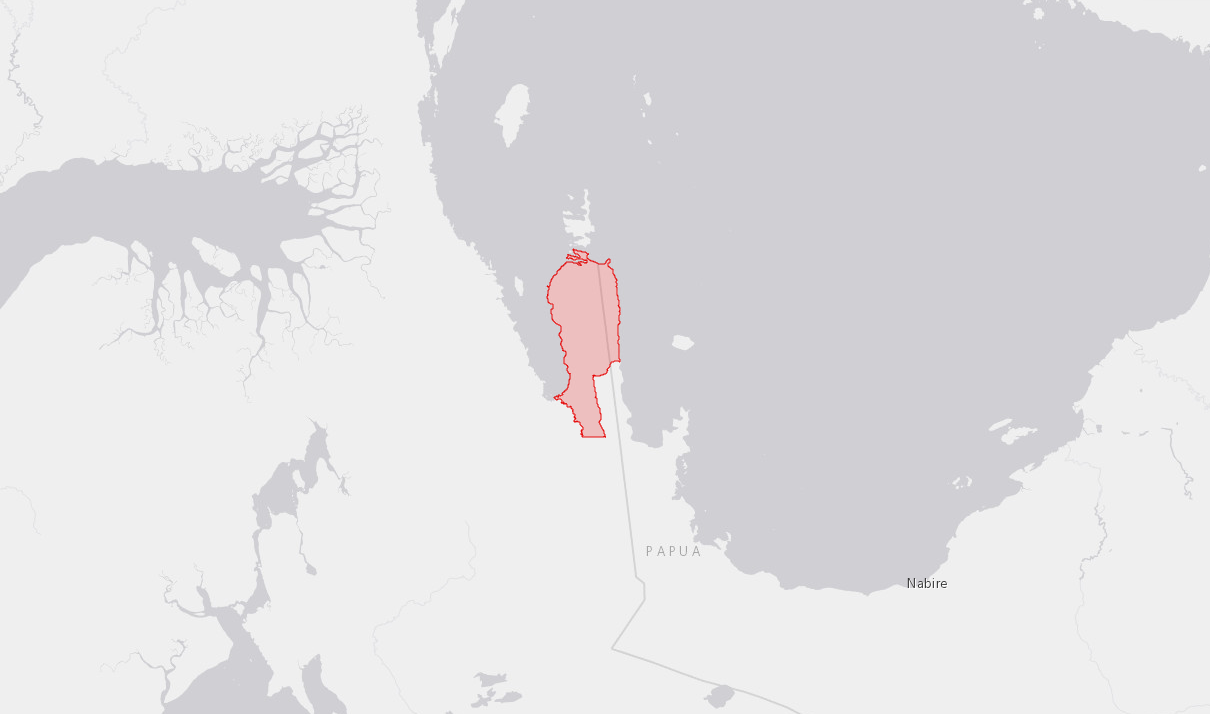
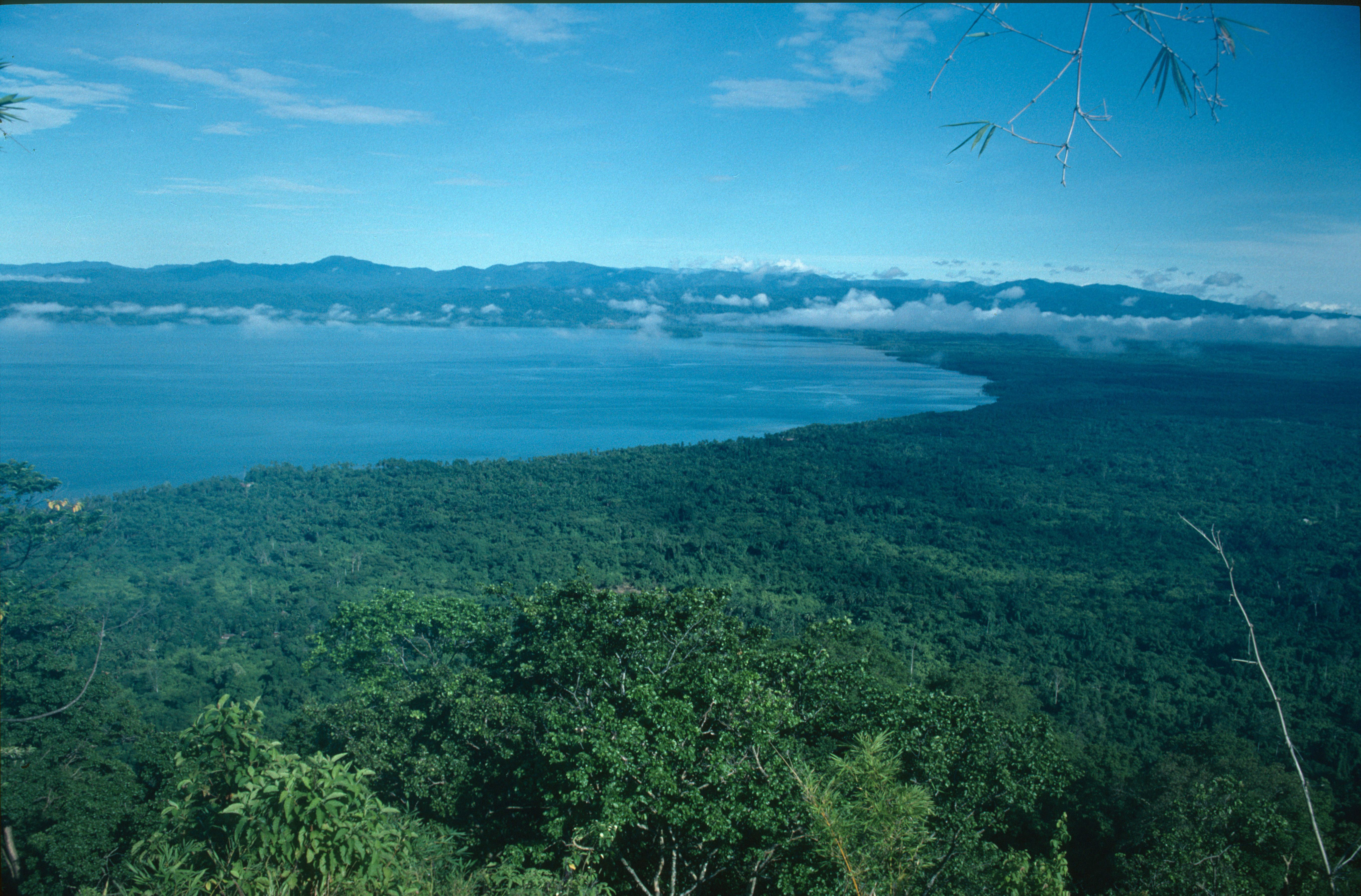
The Wandamen peninsula is a mountainous peninsula on the northern side of New Guinea mainland in Cenderawasih Bay. The peninsula is dominated by steep mountain ridge, the Wondiboy mountains, which runs from north to south and reaches a peak elevation of 2250 metres. There is a narrow coastal strip which contains most of the region's settlements. This TIPA follows the border between Kabupaten Wondama and Kabupaten Wondama in the east, the western channel of the Wosimi river in the west, and then follows the coast of the peninsula. The TIPA includes the Pegunungan Wondiboy Nature Reserve.
Botanical significance
Ungirwalu et al. (2016) documented 25 useful plant species in the region, including the Near Threatened Intsia bijuga. There are 9 site endemic plant species: Calamus wanggaii (LC), Hydriastele wosimiensis (DD), Gaultheria kosteri (LC), Astronia chartacea (DD), Dendrobium lancilabium (LC), Agalmyla roseoflava, Agalmyla wondiwoiana, Ceratostylis curvimentum and Ceratostylis mayrii. As the forests of the Wandammen area are mainly intact, those endemic species which have been assessed according to Red List criteria are not in threatened categories, however they have small range sizes and could become threatened in the future.
Habitat and geology
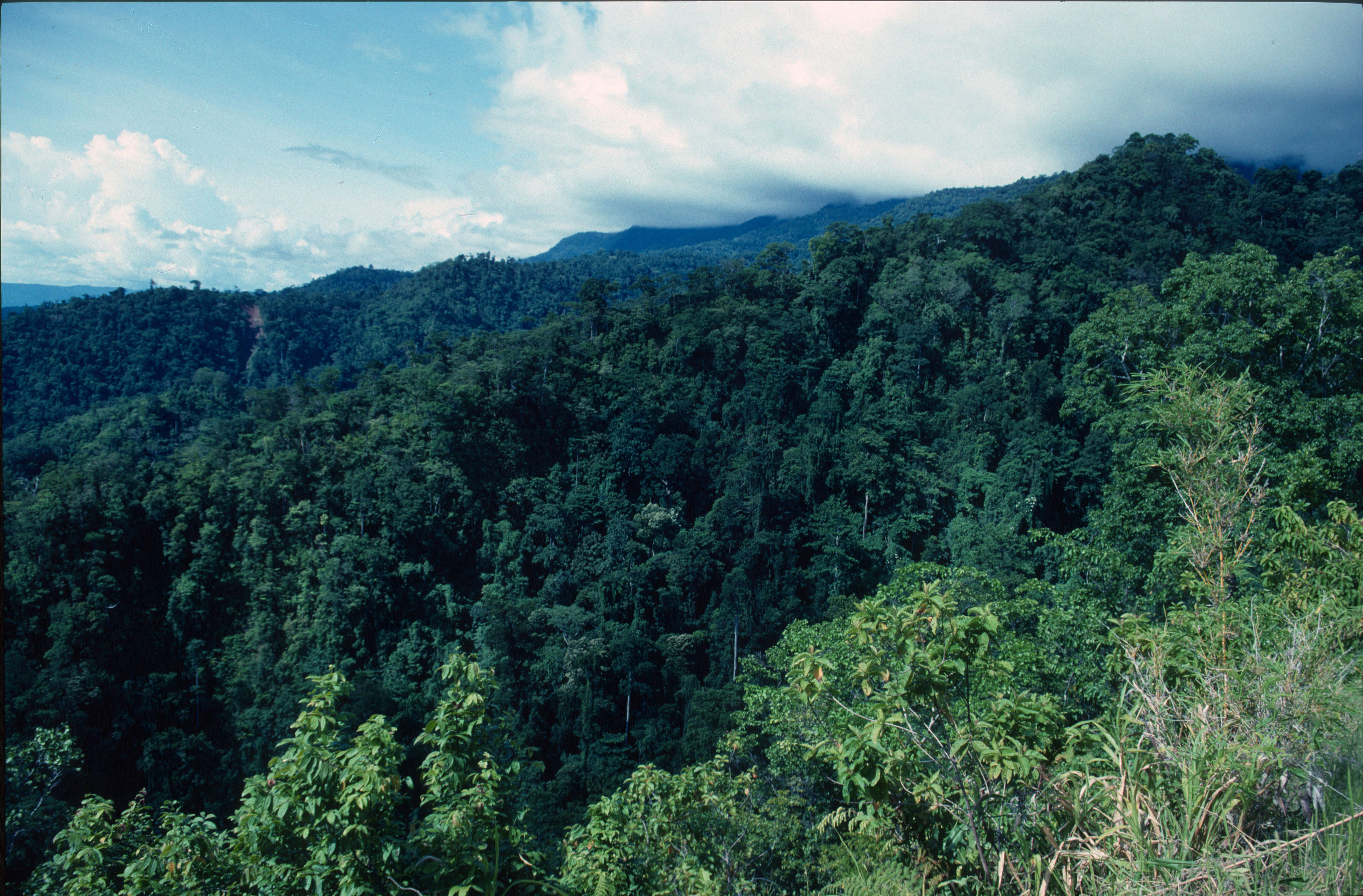
The large elevational range of the peninsula means that this TIPA covers a large range of habitats from lowland rainforest, through lower montane forests with Fagaceae and Lauraceae, to dense mossy montane forest with Nothofagus. The composition of the primary and secondary forests of the lowland coastal areas were surveyed by Murdjoko et al. (2021) with a focus on a species of Haplolobus (Buah Hitam in Indonesian), the fruits of which are widely consumed in the region. The geology of the peninsula mainly comprises high pressure metamorphic rocks, aged from about 1 to 4 Ma (Kaymakci et al. 2013).
Conservation issues
There is little forest loss on most of the peninsula due to the steep and inaccessible terrain. The Pegunungan Wondiboy Nature Reserve covers 795 km2 of the peninsula, but excludes the lowlands. The development and expansion of settlements in the lowlands is causing some forest loss in those areas. The Wandammen peninsula also supports a high diversity of frogs, including 13 species endemic to the peninsula (Gunther et al. 2023). The Wondiwoi tree kangaroo (CR) was photographed in 2018 in the mossy montane forest at the highest elevations in the Wondiwoi mountains, before which it was known from a single specimen collected in 1928.
Ecosystem services
The Wandamen peninsula forests are sources of non timber forest products for the local people, and include the catchment area for their drinking water supplies. The dense and intact montane forests, as well as supporting the plant species endemic to this peninsula, are also habitats for threatened and endemic vertebrate species.
Site assessor(s)
Assessed by:
Laura Jennings, Royal Botanic Garden Kew
Charlie D. Heatubun, The Provincial Government of West Papua and Universitas Papua
Jimmy Wanma, State University of Papua
Liam Trethowan, Royal Botanic Gardens, Kew
Date of first assessment: 4th Mar 2025
IPA criterion A species
| Species | Qualifying sub-criterion | ≥ 1% of global population | ≥ 5% of national population | 1 of 5 best sites nationally | Entire global population | Socio-economically important | Abundance at site |
|---|---|---|---|---|---|---|---|
| Hydriastele wosimiensis W.J.Baker & Petoe | A(iii) |  |
|
|
|
|
Unknown |
| Gaultheria kosteri (Sleumer) Kron & P.W.Fritsch | A(iii) | |
|
|
|
|
Unknown |
| Agalmyla roseoflava Hilliard & B.L.Burtt | A(iii) | |
|
|
|
|
Unknown |
Hydriastele wosimiensis W.J.Baker & Petoe
Qualifying sub-criterion:
A(iii)
≥ 1% of global population:
≥ 5% of national population:
1 of 5 best sites nationally:
Entire global population:
Socio-economically important:
Abundance at site:
Unknown
Gaultheria kosteri (Sleumer) Kron & P.W.Fritsch
Qualifying sub-criterion:
A(iii)
≥ 1% of global population:
≥ 5% of national population:
1 of 5 best sites nationally:
Entire global population:
Socio-economically important:
Abundance at site:
Unknown
Agalmyla roseoflava Hilliard & B.L.Burtt
Qualifying sub-criterion:
A(iii)
≥ 1% of global population:
≥ 5% of national population:
1 of 5 best sites nationally:
Entire global population:
Socio-economically important:
Abundance at site:
Unknown
General site habitats
| General site habitat | Percent coverage | Importance |
|---|---|---|
| Forest - Subtropical/Tropical Moist Lowland Forest | |
|
| Forest - Subtropical/Tropical Moist Montane Forest | |
Forest - Subtropical/Tropical Moist Lowland Forest
Percent coverage:
Importance:
Forest - Subtropical/Tropical Moist Montane Forest
Percent coverage:
Importance:
Land use types
| Land use type | Percent coverage | Importance |
|---|---|---|
| Nature conservation | |
Major |
Nature conservation
Percent coverage:
Importance:
Major
Protected areas
| Protected area name | Protected area type | Relationship with IPA | Areal overlap |
|---|---|---|---|
| Cagar Alam Pegunungan Wondiboy | National Reserve | IPA encompasses protected/conservation area | |
Cagar Alam Pegunungan Wondiboy
Protected area type:
National Reserve
Relationship with IPA:
IPA encompasses protected/conservation area
Areal overlap:
Conservation designation
| Designation name | Protected area | Relationship with IPA | Areal overlap |
|---|---|---|---|
| Wondiwoi | Key Biodiversity Area | protected/conservation area overlaps with IPA | |
| Wondiwoi | Alliance for Zero Extinction Site | protected/conservation area overlaps with IPA | |
Wondiwoi
Protected area:
Key Biodiversity Area
Relationship with IPA:
protected/conservation area overlaps with IPA
Areal overlap:
Wondiwoi
Protected area:
Alliance for Zero Extinction Site
Relationship with IPA:
protected/conservation area overlaps with IPA
Areal overlap:
Bibliography
Geodynamic Evolution of the Banda Sea Region
American Geophysical Union, Fall Meeting 2013
A new large green treefrog (Litoria: Pelodryadidae) from western New Guinea, with the description of a new diagnostic character for the Litoria graminea group
Raffles Bulletin of Zoology, Vol 71, page(s) 417–429
Adaptive Management Utilization of Black Fruit (Haplolobus monticola Blumea) Ethnic Wandamen-Papua
Jurnal Manusia dan Lingkungan, Vol 23(2), page(s) 266-275
Floristic Composition of Buah Hitam Habitats in Lowland Tropical Mixed Forest of West Papua, Indonesia
Floresta e Ambiente, Vol 28(3), page(s) e20210042


Recommended citation
Laura Jennings, Charlie D. Heatubun, Jimmy Wanma, Liam Trethowan (2026) Tropical Important Plant Areas Explorer: Wandamen (New Guinea). https://tipas.kew.org/site/wandamen/ (Accessed on 26/08/2026)